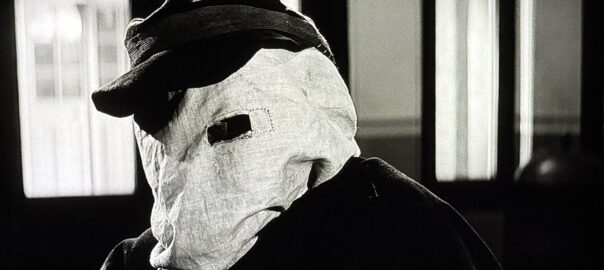
With 1980’s The Elephant Man, David Lynch was taking a big step forward in his career in just about every conceivable way. He was tackling complex subject matter rooted in historical biography — the story of Joseph (known as John in his film) Merrick, a severely deformed man who lived in nineteenth-century London. He was dealing with a much bigger budget than with his stunning, avant-garde debut, Eraserhead, as well as a fixed and finite shooting schedule. He was also in charge of a full professional film crew instead of an intimate core group of collaborators filling multiple roles.
For these reasons and many more, in a career studded with big swings, huge triumphs and highly idiosyncratic choices, The Elephant Man may represent the most fascinating moment in Lynch’s career — the part of the rollercoaster just before you reach the apex, with a panoramic outlook spread out before you that offers significantly different views depending on which direction you glimpse. Lynch’s sophomore feature film came after the long, slow, word-of-mouth midnight-show success of his debut. But it was before the air-quote failure of the big-budget sci-fi adaptation Dune, and then his artistic and reputational rebirth with Blue Velvet. And, of course, it came before Twin Peaks, which he co-created with Mark Frost, made Lynch (for at least a fleeting moment) a household, very mainstream name.
Inarguably confirming its director’s technical filmmaking prowess, The Elephant Man was, in other words, the leaping-off point for all that followed — a stirringly compassionate work that skirts easy sentimentality in favor of trawling the deeper waters of anguish, loneliness, and essential human connection. The film was both a critical hit and commercial smash, grossing $26 million domestically (more than five times its budget) and scoring eight Oscar nominations, tying Raging Bull for the most that year. Meanwhile, the Academy Award for Best Makeup and Hairstyling was created the very next year, in direct response to an overwhelming amount of criticism for the work in The Elephant Man not being somehow specially honored.
The film centers on the aforementioned Merrick (John Hurt), a young man in his 20s with bone deformities and enormous protuberances of skin. Merrick “works” for Mr. Bytes (Freddie Jones, below), an alcoholic, physically abusive carnival barker whose Victorian-era freak show draws gawking crowds in London’s hardscrabble East End. After hearing about him, Dr. Frederick Treves (Anthony Hopkins), a surgeon at the nearby London Hospital, pays Bytes to bring Merrick in for an examination, and presentation to his colleagues.
After his return, Bytes beats Merrick badly, necessitating another visit to the hospital. Treves treats him, and is surprised to discover that Merrick is actually quite intelligent, capable of both speech and independent thought. Treves then prevails upon Francis Carr Gomm (John Gielgud), the hospital’s ruling administrator, to admit Merrick as a full-time resident despite the hospital’s inability to cure or even meaningfully treat his myriad conditions.
More ups and downs ensue, as Merrick is both abused by a hospital night porter (Michael Elphick) who sells tickets to leering drunkards, and kidnapped and taken back out on the road by the execrable Bytes. But Merrick eventually makes his way back to the London Hospital, where he’s welcomed back by Treves and the staff, and warmly received by a compassionate stage actress, Madge Kendal (Anne Bancroft).
