Ethnic
and/or race-based comedy is a notoriously slippery slope, but its
popularity shows no signs of waning, be it in the form astute
observation (see: Chris Rock) or any amount of material decidedly less
so (see: Carlos Mencia). Among the latest into the fray is Russell
Peters, an Indian-Canadian comic whose riotous live performances have
taken him across four continents and back again, thus making the cover
picture of him looming over a globe entirely appropriate.
This disc features a concert performance from San Francisco’s
historic Warfield Theater from January of this year. From the get-go,
Peters dives into differences of race, language and culture, and then
applies this lens to virtually everything, with far more of a bemused
than incendiary point-of-view. In one bit, he assays the nuanced
differences in various Asian tongues, remarking that certain dialects
are identifiable because speakers always sound like they’re falling off
a cliff.
Peters has a natural charisma and charm, but for me, some of the routine seems reductive. (“Black and
Latino?” he queries one audience member. “Your credit must suck!”)
Granted, he makes himself the butt of the joke as often as not (there’s
an amusing run about body hair), but in 2006 do we really need another bit about the differences between how white and black people dance?
Peters’ material is better when he’s examining the world through his
own unique perspective — whether it’s something as simple as his own
name (yes, he’s Indian, but that’s his real surname) or the manner in
which various Caucasian friends are so paralyzed by the idea of being
labeled racists that they’re scared in many instances to speak plainly.
Housed in a regular Amray case, Russell Peters: Outsourced is
presented in a 4×3 aspect ratio with a Dolby digital 5.1 audio track,
and clocks in at 72 minutes. It also features an interesting roster of
optional subtitles that includes English, Hindi, Cantonese and Mandarin
— the first comedy album to tout the latter three, the release boasts.
While some more interview material would certainly have been a welcome
inclusion, one can certainly view a purchase or rental of a title like
this as a lot cheaper than the combination of a date and doubled-down
two-drink minimum at almost any given local comedy club. If Outsourced
sounds like it’s up your alley, invest accordingly. Or if you have long
commutes, check out Peters’ same-named concert CD. For more information
visit his eponymous Web site. C+ (Movie) B- (Disc)
There
were a few brief, if strange, years in the mid-1980s through the early
’90s, when heavy-lidded hoofer Gregory Hines was a bankable film actor,
appearing opposite stars like Billy Crystal in big screen fare like Running Scared and A Rage in Harlem.
His skill set was a unique one, rooted in a leonine charisma, and three
years after his unfortunate passing from liver cancer, two of his
better known movies from this period receive special edition DVD
treatments.
The first is 1985’s White Nights, the rather bloated story of
world-renowned dancer Nikolai Rodchenko (Mikhail Baryshnikov), who,
eight years after defecting from Russia, finds himself back on his
homeland’s soil against his will when his plane is forced to make an
emergency landing. Concerned for their international image and wanting
to coax him into returning of his own volition, Soviet leadership sends
Nikolai to Siberia with American ex-pat Raymond Greenwood (Gregory
Hines), a talented tap dancer who’s requested Russian citizenship
because he’s tired of racism at home. Despite clashing ideologies, the
two men find that their love of dance overcomes principled differences,
even as they lean on one another in reverse fashion. Twyla Tharp’s
choreography and the two stars’ innate talent makes sequences set to
Lionel Richie’s “Say You Say Me” and Phil Collins and Marilyn Martin’s
“Separate Lives” compelling, but the political passages are typically
sludgy and inert.
1989’s Tap is the more interesting of the two movies. It
finds Hines cast as Max Washington, a recently furloughed criminal who
makes moves on an old girlfriend (Suzanne Douglas) and gets involved in
a jewel heist with a local crime boss (Terrence McNally) when the lure
of one big “last payday” becomes too tempting. The story, written and
directed by Nick Castle, is pure boilerplate, but it’s energetically
conveyed, nicely designed and allows Hines to toe-tap with Sammy Davis,
Jr., whose character Little Mo wants to cast Washington in a new revue.
Overall, it’s just a lot more affable and engaging than White Nights, which has a Reagan-era, dual-superpower gravity and somberness that’s out of step with modern circumstances.
Housed in regular Amray cases, Tap and White Nights
are each presented in 1.85:1 anamorphic widescreen. The latter features
an English language Dolby digital 5.1 track, Portuguese audio track and
optional subtitles in French, Korean, Spanish and the two
aforementioned languages; Tap, meanwhile, features Dolby
surround tracks in English and French, as well as subtitles in those
tongues. Director’s commentary tracks anchor each release, and White Nights includes a nice little making-of featurette.Tap
doesn’t pull a hamstring, though, as four new mini-documentaries
include interviews with Castle, producer Fan Saperstein, Tony Award
nominee Savion Glover and many of the film’s dancers, as well as
beautiful vintage footage of Davis and Hines. C- (White Nights), B (Tap); B (Discs)
Green
on Red formed in the heat of Tucson, Arizona, in the early 1980s,
comprised of singer-songwriter Dan Stuart, Chris Cacavas on keyboards,
and Jack Waterson on bass. After relocating to Los Angeles and picking
up drummer Alex “Big Dog” MacNicol (guitarist Chuck Prophet also came
on board in 1985, and Cacavas eventually departed for a solo career),
they found their interests unaligned with the public’s appetite for new
wave synth-pop. While critical accolades for their neo-psychedelic
noodlings never translated into any true and lasting measure of
mainstream success, Green on Red nonetheless developed a reputation as
a solid live act, and this reunion concert offers forth a nice if
marginal glimpse at where they are now and what might have been.
The circumstances of Valley Green — Live at the Rialto’s 2005
recording were less celebratory than erstwhile fans might have hoped.
While on the one hand an anniversary of sorts, it was also a gathering
to honor their fallen colleague, MacNicol, who passed in January of
2004. Sharing the stage for the first time in more than 18 years, the
result is an emotional set full of sloppy, careening brilliance…
followed by sluggish passages where out-of-step rhythms tread over one
another in awkward fashion. The track list here includes 16 cuts,
including “Gravity Talks” and “Hair of the Dog” (!), but it’s late-set
tunes like “The Drifter,” “Sea of Cortez” and “Fading Away” that most
connect.
The filming of the September 2005 show — which takes place at a
theater that borders an apparently fashionable hotel in Tucson — is
another head-rubbing matter. Non-English-speaking Brazilian tourists
were apparently drafted on a whim to record the concert (seriously),
and the framing and just about everything else other than the audio
quality suffers accordingly over the course of the next 85 minutes. The
street-ambling lead-in filmed with the band members gives the piece a
nice little filmic feel — Stuart, talking about one of the keys of art
and life being knowing when “to go away,” comes off as a fragile and
fractured ego of the Brian Wilson mold — but the relentless
cross-cutting and irksome angles at the show mar what is also an uneven
show.
Packaged in a regular Amray case, Valley Green — Live at the Rialto
is a region-free release presented in full-screen. The picture quality
is so-so, but, as mentioned, the editing and directing are annoying,
and the main menu screen additionally suffers a few hiccups (I had to
reload twice after it froze up and rendered all buttons useless, but it
played fine from there). A bi-fold paper inset advertises other
releases from Brink DVD. C (Show) C- (Disc)
As this spring’s Take the Lead hits DVD in advance of another season of Dancing With the Stars, it’s worth noting that Antonio Banderas continues to cut his own path, sometimes to the chagrin of his agents and manager.A gleam in his eye, Banderas leans forward somewhat
conspiratorially. “People may not understand it from the outside, but
I’m not so worried about that,” he insists. “In fact, I am not worried
about my career at all. I think it’s an act of narcissism to be too
worried about your career.”
“I’ve done everything in my career. I’ve done movies for kids, I’ve done
underground movies with [Pedro] Almodovar, I’ve done action movies,
I’ve done musicals, I’ve done cartoons, I’ve done theater, I’ve
directed and I don’t care what people are going to say when I die. F*ck
’em, I don’t care.” For the full feature, re-posted on FilmStew from the film’s theatrical bow, click here.
In the early 1990s, Disney made a play at repackaging several of its animation properties and characters, blending The Jungle Book’s irrepressible Baloo into his own high-flying show, along with caped crime-fighter Darkwing Duck. Paired with Ducktales and Rescue Rangers,
the shows found a welcome audience with the same sort of coveted
“tween” audience that would, years later, prove similarly instrumental
as part of the base of support for animated films like Toy Story and Shrek.
Taking a knowing pinch of Indiana Jones’ adventurism, Talespin
centers on bad-with-the-books bush-plane pilot Baloo and young orphan
bear Kit Cloudkicker, who’s befriended his genial slacker elder but
also stolen a valuable treasure from a band of pirates led by the evil
Don Karnage (still one of the great villain names of all time — why
wasn’t he a Bond baddie?). With these scoundrels but also the threat of
foreclosure looming, newcomer businesswoman Rebecca Cunningham swoops
in, rechristens their enterprise “Higher for Hire” and holds Baloo and
Kit to schedule and commitment. Several of Baloo’s old jungle
acquaintances pop up here and there, lending the show an amusing
crossover appeal. Still, while there’s plenty of fun to be had, there’s
not the greater pleasure of a delicately constructed arc, as —
excepting the four-part pilot that kicks things off — Talespin’s
half-hour shows tend to be fairly discrete and self-contained.
Highlights include “I Only Have Ice for You,” “All’s Whale That Ends
Whale,” “Bearly Alive” and “A Star Is Torn.”
Set in the superhero metropolis of St. Canard, Darkwing Duck
is a sort of Batman for the kiddie animation set. Its titular masked
crime-fighter — and his daytime alter-ego Drake Mallard — were
unassailably good, and the cast of villains hiss-worthy. Many, in fact,
hailed from the Fiendish Organization for World Larceny or, yes,
F.O.W.L. for short. Take the lamentation and brooding out of
contemporary readings of comic heroes like Batman, Daredevil and the
like and you have Darkwing Duck, who — along with adopted daughter
Rosalyn and Launchpad McQuack — labored to keep the streets safe for
all, feathered and otherwise.
Both Talespin and Darkwing Duck are packaged in
cardboard slipcases that house three slimline plastic cases, each with
one disc. Twenty-three episodes of the former series and 25 of the
latter are presented in 1.33:1 full screen, with twin Dolby digital
stereo English sound tracks, optional French language tracks and
optional English captioning as well. The images herein are fairly soft
on both releases, with some slight grain and artifacting present;
basically, this is before the advent of crystal clear digital computer
animation, and efforts of preservation are dutiful if not painstaking,
with more of eye toward placating a captive kiddie audience rather than
animation historians or hardcore aficionados. There are unfortunately
no supplemental extras on either set. Pun-riddled jokes are a big part
of each show, but Darkwing Duck gets the slight nod for its more feverish subversion of formula. B- (Shows) C+ (Discs)
One
only made three movies, but left an undeniable mark on American acting,
the other got his start on the circus and vaudeville circuit — extinct
toiling ground for a performer today — and went on to crank out lighthearted fare largely forgotten today.
I’m talking first, of course, about James Dean, who channeled his own personal demons and estranged relationships into instinctive and raw work of surprising vulnerability in East of Eden and Rebel Without a Cause. His death at 24 years of age in an auto accident sealed in the public’s mind his impetuous, headstrong image, and though the films are available on DVD, if one prefers the big screen, they’re both screening through Tuesday night, August 29, at the New Beverly Cinema in Los Angeles,
located at 7165 Beverly Blvd., one block west of La Brea. The double
feature costs $7 for general admission, $6 for students with ID and $4
for seniors and children.
Alas, Joe E. Brown, on the other hand, captured no
such lasting appeal; he’s perhaps best known to mainstream audiences as
millionaire Osgood Fielding III in Billy Wilder’s Some Like It Hot.
For classic film fans, a new two-disc DVD set attempts to right that
wrong, offering up a look at some of the movies of an actor who seamlessly pulled off a variety of physical comedy and in his later
years won hearts by bucking up the spirits of American G.I.s abroad.
Most of Brown’s best — movies like Top Speed, Elmer the Great and Alibi Ike — aren’t included here, but one can certainly do much worse than the value this set affords.
The first disc features 1938’s Wide Open Faces and The Gladiator,
the latter of which is probably the best film herein. In it, Brown
plays Hugo Kipp, a gangly college student who is injected by a mad
scientist with a serum that imbues him with extraordinary athletic
prowess. This allows Kipp to capture the attention of pretty coed Iris
Bennett (June Travis), among many other benefits. The second disc
includes Flirting with Fate, in which Brown is cast as the
desperate manager of a vaudevillian act. Stranded in South America, he
schemes to take out a life insurance policy and then attempt to get
himself “killed” by bandit chieftain Sancho (Leo Carrillo). Mayhem
ensues. The final film is the awfully titled Earthworm Tractors,
which finds Brown amusingly exercising his gift for gab as a
fast-talking salesman, an archetype of the era. While actor biographies
and trailers are a welcome addition on the set, even more history on
Brown and some interview footage with film historians and/or critics
would be a welcome addition. Still, four classic, heretofore
commercially unavailable movies for under $20 isn’t a bad deal for
discerning cinephiles.
Look, I have exactly one thing to say about Material Girls, the cute
little PG-rated romp starring sisters Hilary and Haylie Duff that opened last
week to $4.6 million, and it has nothing to do with how much I’ve had to drink
tonight.
I noticed as I was wandering by its poster today
that this movie has 19 effing producers… 19! And no, that’s
not counting the credited line producer either. Sure, you’ve got a couple Duffs on the list, and the requisite mix of executive producers and co-producers. But
sweet frickin’ Christ, Hollywood,
you’re telling me it really took this many people to
painstakingly piece together a masterpiece like this while Munich or Forrest Gump or
any number of complex epics have four or less? Producer credits are a complete
joke — the new STD of the industry — and if I were an ass-busting member of the Hollywood old guard, I’d be mightily pissed.
So this is my challenge, any and all Material Girls producers:
defend yourself and all your cohorts, explain who did what and why you deserve
poster/title card position. I’m talking to you, David Faigenblum, Brent Emery,
Milton Kim, Troy Rowland, Tara Pirnia, Guy Oseary… aww, screw this. I’m tired
of typing out all these names…
Writer-director Ryan Fleck’s Sundance-minted Half Nelson is a glancingly remarkable, two-handed character study that slips up a bit in its overly impressionistic trafficking but still features a solid performance from Ryan Gosling (above), who continues to be the best kept under-25 secret in Hollywood. While tough-love mentor tales are a dime a dozen, much rarer are movies which indulge the notion — let alone proffer a glimpse — of the curative
effect of surging adolescent inquisitiveness and an unwounded (yet far
from naïve) psyche on a somehow equally or even moreso vulnerable or adrift adult. And that’s what Half Nelson attempts, so mad props for effort, at least. For the full review, from FilmStew, click here.
With the micro-budgeted indies Walking and Talking and Lovely and Amazing, writer-director Nicole Holofcener established herself as an astute chronicler of contemporary mores. Friends with Money, her third feature, continues the trend, examining an ensemble caught up in the anxious tumble-cycle of modern life, chafing against the combined stress and weight of notions of happiness and success largely prescribed by others. An amusing snapshot of class and the safe boundaries, attitudes and behavior that it sometimes enables, it’s a movie that embraces you with the warmth of real life, real characters and real complications.
Jennifer Aniston), single, broke and younger than her married friends. A former teacher, we’re told, she’s taken to working as a maid, if for no other reason than it doesn’t require much thought or effort, and it allows her indulge her recreational penchant for marijuana. A psychological and emotional doormat, Olivia takes up with Franny’s trainer, Mike (Scott Caan), a shallow mooch who shadows Olivia to her housecleaning gigs to screw her and loaf about, and then has the temerity to ask for a cut of the money, which she, of course, gives him.
Each couple frets about or harps on various combinations of one another, and to some degree begin to examine their own lives. Jane and her husband are both successful, but she’s still driven by a quiet, if comical, hair-trigger rage; stolen parking spaces and store line-jumping send her spinning off into apoplectic tizzies. Christine and David are building an addition to their house to maximize their sunset view, but may have reached a point of stasis in their relationship. Franny and her husband Matt (Greg Germann), meanwhile, are the most financially well-off of all, and indulge their children and themselves. A point of focus for all is Olivia, who drifts through her days obliviously, her greatest of-the-moment worry how to continue to indulge her fondness for an expensive skin cream on her current meager wages.
Friends with Money sings with the vim of Holofcener’s righteous observational powers. The film wonderfully captures the way many couples bond through the casual denigration of others, especially supposed friends. It’s spot-on in its distracted patter, and the men and women alike — though some of the former are a bit thinly sketched — generally give as good as they get. When David rightly assays Christine’s hysteria in one scene, she shoots back, “You always do that — just so you can remove yourself enough to feel superior, so you don’t have to feel or be affected.” That you simultaneously feel both points of view are correct is a credit to Holofcener’s gift for charged banter. If there’s an overarching criticism or problem here, it’s that Olivia doesn’t feel quite a necessity in this story. Truth be told, she’s the least interesting character of the bunch, and this has far less to do with Aniston’s performance than the fashion in which she’s written, as somewhat of a cipher.
Holofcener, like other indie directors before her (Ed Burns in She’s the One, Miguel Arteta in The Good Girl), loves to point the camera at Aniston’s placid face (for someone of such small-screen experience, Aniston does plaintive surprisingly well) and try to tell us that this passes for profundity. Unfortunately, Olivia is bland and easy to read; her obsession with a married former fling marks her as depressed, and the film’s clever welcoming bosom for her in the end comes off chiefly as a shrug. The actual friends with money, though, are far more fascinating. Their problems may be more abstruse and open to debate, but because of that, they’re more real. They’ll be the ones you’ll be talking about on the way home.
Friends with Money comes to DVD presented in a regular plastic Amaray case. Its supplemental extras include an 11-minute behind-the-scenes featurette and a lively, feature-length audio commentary track with Holofcener and producer Anthony Bregman. There’s also a combined nine minutes of footage from the movie’s Sundance Film Festival bow and its Los Angeles premiere at Grauman’s historic Chinese Theater. B+ (Movie) B (Disc)
The Quiet
reminds me of that old Conan O’Brien sketch, which I haven’t seen in a
while, entitled “Seeee-crets,” wherein a guest usually participates in
a taped confessional by admitting, with clench-jawed commitment, to
some absurd, mock-dark skeleton in the closet. The Quiet is
marked by a similar solemnity, except that it doesn’t fancy itself a
joke. Shot by M. David Mullen in what is possibly the most dimly lit
house ever, it’s a dreadfully self-serious and undeservedly
self-satisfied drama, an exposé of idyllic suburbia that offers forth
the surface appearance of evocative contrasts with none of the
corresponding psychological depth.
Leading the parade of
wafer-thin characterizations is high-school cheerleader Nina (Elisha Cuthbert, also a producer), whose sneering, unsubstantiatedly vicious
demeanor is egged on by an equally catty and bitchy friend, Michelle
(Katy Mixon). This, despite an outwardly perfect life, naturally means
that she’s masking a dark secret. The most immediately apparent source
of Nina’s irritation is Dot (When a Stranger Calls’ Camilla
Belle), a silent, presumably deaf girl, whom Nina’s parents, architect
Paul (Martin Donovan) and interior decorator Olivia (Edie Falco), have
taken in after the death of her father. Dot is the very definition of
unassuming, but nonetheless becomes a whipping post for Nina’s pent-up
anger — even more so when letterman Connor (Shawn Ashmore), Michelle’s
crush of the moment, expresses an interest in her. All manner of
guarded secrets then come tumbling forth, both in confession and
through deduction, with life-altering consequences for nearly all those
involved.
The Quiet is actually director Jamie Babbit’s second feature film (she’s also helmed episodes of Popular, Gilmore Girls and Nip/Tuck), but it exhibits none of the colorful eccentricity of her first — the zonked-out high school lesbian comedy But I’m a Cheerleader,
which I found dreadful, but at least flamboyant and original, bad in an
interesting fashion. Penned by Abdi Nazmian and Micah Schraft, though, The Quiet
merely substitutes tranquility for perspicacity, and is driven by the
twin engines of illogicality and whimsicality. Characters are defined
frequently only through others’ descriptions of them, and rarely
through their own behavior. Olivia is a pill-popping, emotionally
inattentive zombie, though we see no evidence of that in our first (and
longest) encounter with her; Connor, meanwhile, is a “hunk” (and
desired, quite explicitly, by Michelle) merely because he’s the only
young male in the movie. The only instance in the story in which this
doesn’t really hold true stands in stark, further jarringly contrast
because of these failings in dimensional shading.
Then there’s the niggling matter of Dot’s deafness and muteness.
Throughout the film, it’s advanced that she can read lips if people are
facing her. Yet The Quiet, a movie presumably predicated upon
carefully modulated mood and a few key revelations, is remarkably slack
about enforcing this scene to scene, so twists that in theory should
surprise characters within the movie will have you howling, “Idiot!” at
the screen. By the time The Quiet’s utterly preposterous ending
unravels — complete with a bizarre, out-of-left-field false confession
that both makes no sense within the actual narrative and offers no
sense of authentic catharsis, release or reprieve for the character(s)
it lets off the hook — you’ll be struck dumb in your own way. (Sony Pictures Classics, R, 95 mins.)
Malinda Williams). In the wake of the death of gangster patriarch
Spats (Ving Rhames), Rooster runs an end-around on ruthless and unscrupulous hooch merchant Trumpy (Terrence Howard), a ploy that
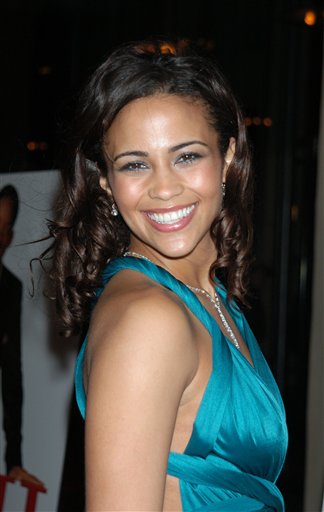
proves dangerous. Percival, meanwhile, is smitten with Angel (Paula
Patton, no relation to Antwan), a torch singer with a secret, who comes
to town on a temporary contract and finds herself caught up in the
ensuing uncertainty and conflict.
Writer-director Bryan Barber, a frequent music-video collaborator
and longtime friend of Outkast, knows the pair well enough to write to
their relative strengths, and not ask them to stretch too far beyond
their comfort zone. For Patton (the less screen experienced of the two)
this means a role shaped as much by those around him (including Bobb’e
J. Thompson as a younger iteration of the character) as Rooster’s own
actions; for Benjamin it means a nervous and introverted role that taps
into his soulful quietude. While full of plenty of crooked,
idiosyncratic detail, Idlewild, which got its start as an HBO
movie, doesn’t strive for an exacting historical accuracy so much as an emotional truth, and in this regard it succeeds.
Where the movie really sings, though, is in its cathartic, mash-up
dance sequences, choreographed by Hinton Battle. Combining elements of
swing, jitterbug, break-dance and the Lindy Hop, these numbers shimmer
with unbridled joy and a pure, pleasing energy unmatched by anything
else on the big screen this year. Barber’s video-honed style, too,
feeds the story. While the beginning and end of the movie offer the
most stylized bits, he also deploys classic editing techniques, subtle
flashes of slow motion and fast forward throughout, and a soundtrack —
which includes a score from workhorse John Debney — that incorporates
various bleeps, scratches and modern high-hats folded into
period-inflected music.
While driven, especially early on, by an overt theatricality that
extends to many of its supporting performances (Faizon Love is a hoot
as blustering club owner “Sunshine” Ace), Idlewild locates a
balanced contrast in Percival, the heart of the film, and Benjamin
knocks this role out of the park with a perfectly measured performance.
If movies are indeed a siren call to the musical performer — who’s also
cameoed in Be Cool and given an equally grounded turn in Four Brothers — the unadulterated delight of Idlewild proves he has an equally felicitous future there. (Universal/HBO Films, R, 123 mins.)
It would be the autobiographical novels Post Office, Women and Hollywood, along with, eventually, the 1987 movie Barfly — all searing portraits of a distinctly Southern California underclass — that would resonate worldwide and turn blue collar novelist and poet Charles Bukowski into a celebrated countercultural icon. The biographical drama Factotum, though, takes as its core Bukowski’s same-titled second tome, as well as excerpts from three other books, all centering around drunken roustabout Henry Chinaski, widely acknowledged to be the writer’s alter ego.
Directed by Norwegian filmmaker Bent Hamer (Kitchen Stories) and released this month through IFC Films, the movie is a rambling, episodic mock-biography of Bukowski, anchored by a fine, square-jawed starring performance from Crash‘s Matt Dillon. Like his creator, Chinaski swings through a wide variety of low-paying, non-creative, menial jobs (working at a bike shop, a pickle factory, as an ice deliveryman and janitor) and a smaller handful of codependent, quasi-abusive monogamous relationships (embodied here by Marisa Tomei as a fling, and Lili Taylor as on-again/off-again girlfriend Janet). Truly playing the field, you see, would take too much effort — as well as time away from Chinaski’s favorite mistress, the bottle. Through it all Chinaski pens short stories and sends them off blindly to a magazine in New York, subsisting on jug-wine and pancakes, cigarettes and melancholy.
Hamer has a penchant for fade-ins and -outs that will strike some as too affected, and the “story” here is undeniably paced like a snail, and at times willfully crude. (One amusing segment finds Chinaski getting his testicles delicately taped up into a homemade diaper after he contracts crabs from Janet.) Dillon, though, has in his age settled into a more mature, relaxed and naturalistic delivery, and he here approximates Bukowski’s deep, rumbling and inflected timbre — part wizened yet intoxicated preacher’s cadence, part sonorous bullshitter — in a manner that really gives you a window into Chinaski’s inherent glumness, his death-grip hold on misery. You get a palpable sense of how Chinaski’s (and thus Bukowski’s) acting out stems from his racing, perpetually dissatisfied inner monologue, and how his general disagreeableness and bad attitude toward those around him is hardwired to an irreconcilable urgency to locate in both life and his art the same sort of forward-leaning insistence he feels in his soul.
For Bukowski, writing was living. An arthouse curio, Factotum isn’t for all tastes, but it’s studded with dark delights (Chinaski stalking one employer, trying to score a check for a half-day’s work), and it conveys with unflinching precision the life of a dinged, beaten-down spirit for whom creativity wasn’t just an impulse but rather a compulsion. (IFC Films, R, 94 minutes)
The
subgenre of metal music has such an aggressive and narrow public image
that when I settled down with this concert disc from Liverpool natives
Anathema — their performance from March 2006’s Metalmania Festival — I
wasn’t quite sure what to expect. Its willfully ambiguous cover
provided me no comfort or assistance. A pleasure to report, then, an
hour-plus show with a complicated underbelly, far from the empty
screaming that marks the worst of atmospheric goth metal.
Fronted
by guitarist-vocalist brothers Vincent and Danny Cavanaugh, Anathema
formed in 1990 under the moniker of Pagan Angel. Their journey to
soaring ethereal soundscapes, imbued with keyboards and moog-distorted
vocals, was apparently a winding one, but also one with an undeniably
rewarding point of conclusion. Whereas the empty posturing of so many
“heavy” bands is to me a turnoff, Anathema has both the musicianship
and the wisdom of age to pull off what is a much more mature and
interesting sound — driving guitars and drumwork laid under sparse melodies. It’s deeper and more textured work than many of their contemporaries.
Opening with a Brahms-influenced, three-minute string introduction
from the Bacchus Quartet, whose members include noted BBC Philharmonic
violinist David Spencer, the band’s 68-minute set charts all of their
best material, and concludes with a cover of Pink Floyd’s “Comfortably
Numb.” That group, as well as Rush, Skycycle and the Black Horses, are
all good points of reference, as a roiling, slowly building sound marks
the best efforts here, which include “Panic,” “Shroud of False,”
“Closer,” “A Natural Disaster” and “One Last Goodbye.” (“Fragile
Dreams,” meanwhile, is carried along by a simply fantastic and subtle
guitar riff.) Drummer John Douglas plays alongside a stuffed dog
throughout, and Cavanaugh engages an alert and accessible audience, who
really get into the music.
Housed in a clear Amray case on a single disc, Anathema: A Moment in Time
is presented in a clean, 1.66:1 anamorphic widescreen transfer, with
Dolby digital 5.1 and Dolby digital 2.0 audio tracks. A small
collection of supplemental extras feature a clutch of Web links, a
photo gallery, desktop images and four bonus video cuts (including a
cover of Fleetwood Mac’s “Albatross”) from a 2004 Kraków show, but the
best inclusion is a 22-minute interview in which the brothers Cavanaugh
discuss various parts of their musical inspiration (Live Aid ’85 was a
kickstarter) and influences, which include usual suspects like Led
Zeppelin, U2, Pink Floyd and Black Sabbath but also, interestingly
enough, Dire Straits. The title is also apparently available in a
limited edition DVD/CD swing case, with the CD containing the same cuts
as presented here in audio-visual form. B (Show) B- (Disc)
Michael Ricci has an interesting piece up on AfterElton.com about the gay innuendo on Scrubs, and its extremely close relationship between its lead male characters, best friends J.D. (Zach Braff) and Turk (Donald Faison). It’s a pretty interesting read for socio-cultural shoegazers like myself, and included in the bit are plenty of quotes from interviews with show creator Bill Lawrence and Robert Maschio, who plays hornball surgeon “The Todd.” The gist of the piece is that Scrubs is one of the gayest shows on television, despite not having a regular or recurring gay homosexual character.
Driven by its iconic score and masterfully manipulated tenseness, Michael Myers first slashed his way across screens in filmmaker John Carpenter’s seminal 1978 movie Halloween, and the franchise has endured through eight sequels (of dizzyingly varying quality) to become one of the most indefatigably lucrative in the history of modern cinema. Just ask home video distributor Anchor Bay, who has tilled profitable soil with a number of DVD releases celebrating Myers’ film appearances. The latest among these is director Stefan Hutchinson’s feature-length documentary Halloween: 25 Years of Terror, narrated by P.J. Soles.
Presented on two discs, and alongside lovingly produced, new Divimax special editions of the fourth and fifth installments in the series, Halloween: 25 Years of Terror presents a comprehensive look back at all the movies of the franchise, and works in equally superlative fashion as a trip down memory lane for fans and an overarching document of one of the horror genre’s true touchstones of the past quarter century for those who perhaps came of age during one its fallow periods, and for that reason never bothered learning what all the fuss was about. Undeniably the most comprehensive Halloween documentary ever produced, Hutchinson’s movie presents the warts-and-all true stories behind every film in the franchise, from Carpenter’s spur-of-the-moment (allegedly beer-fueled, late night) decision to make Myers the younger brother of the stalked Laurie Strode (Jamie Lee Curtis) in Halloween II to the mask controversy that would plague Miramax-Dimension’s misguided 1998 H20 entry.
There’s great gossip of minutiae too, from the fact that Quentin Tarantino apparently penned a never-lensed version of what would be Halloween VI (the movie that would entirely discard the interesting cult storyline of part five, and end up being one-third re-shot) to the fact that Halloween: Resurrection‘s Brad Loree, as Myers, apparently had a problem with nervous flatulence, which made him a bit less menacing. In addition to a huge stockpile of rare behind-the-scenes footage, the film also boasts over 80 interviews with Halloween cast and crew, including Carpenter, Curtis, original co-writer/producer Debra Hill, deceased producer Moustapha Akkad, effects guru Greg Nicotero, Tom Atkins, Danielle Harris, Kathleen Kinmont, Nancy Loomis, Joseph Wolf, John Carl Buechler, Nick Castle, Dean Cundey, Jodi Lyn O’Keefe, Rick Rosenthal, Tommy Lee Wallace and more, plus fans like author Clive Barker, Shaun of the Dead director Edgar Wright and musician-turned-filmmaker Rob Zombie, who’s signed on to write and direct the next installment in the Halloween series.
The title’s second disc includes all sorts of great panel discussion footage from the “Return to Haddonfield” convention held for the original movie’s 25th anniversary in 2003 (hence the doc’s title). There’s also a behind-the-scenes photo gallery, an original artwork gallery, extended cast and celebrity interviews, on-set footage from Halloween V, a tour of the filming location and much, much more. This is a great disc for diehard fans, and a handheld guide for horror aficionados who are for some reason Halloween neophytes. To purchase the DVD via Amazon, click here. A- (Movie) A (Disc)
The
recent return of the space shuttle Atlantis, first after there was
trouble getting off the ground — launch was delayed four times, twice
by weather and twice more by technical glitches — and then after
experiencing more hiccups while on its mission to resume construction
of the space station, underscores the immutability of outer space’s
siren call. Apollo 13: Journey to the Moon, Mars and Back
offers an informative glimpse back on that same rich history, and
serves as an awe-inspiring reminder of the risks and fruits of human
exploration.
Collecting three separate Nova-sponsored features in a single, handy boxed set,Apollo 13: Journey to the Moon, Mars and Back kicks off with Apollo 13: To the Edge and Back,
a great non-fiction companion piece to Tom Hanks and Ron Howard’s
cinematic collaboration. With firsthand accounts from the pilots, their
families and the folks back on Earth manning mission control, the title
tells the gripping true story of the catastrophic flight of Apollo 13
and the heroic struggle to bring all of the astronauts back alive. To the Moon
casts a bit broader net, charting the impossible odds of NASA’s space
program and race to the moon, which began with then-President John F.
Kennedy’s call to service and heavenly investigation in the early
1960s. While the moonwalk of ’69 gets major coverage, the inclusion of
interviews with a variety of unsung heroes and bit players gives this
title a depth unrivaled by any space documentary.
The final mini-feature in the batch, Mars: Dead or Alive,
thankfully features no Val Kilmer. Highlighting the pioneering and
risky mission of twin rovers Spirit and Opportunity, the film details
the painstaking construction of the machinery as robot geologists,
searching for clues that can tell us whether this harsh and barren
planet was ever in its history a place that could have supported life.
Three separate Amray cases comprise Apollo 13: Journey to the Moon, Mars and Back,
all of which are stored in a sturdy cardboard slipcase. The films are
presented in 4×3 fullscreen, though it hardly matters given the
straightforward arrangement of the productions. Bonus materials include
a profile of NASA’s Donna Shirley on Mars: Dead or Alive; she
was the team leader of Sojourner Truth Mars rover mission. There’s also some brief extra interview material, and printable materials for
educators to help facilitate further classroom discussion. B (Movies) C (Disc)
The eponymous production company of megastar Tom Cruise and his agent/producing partner, Paula Wagner, found their cushy studio contract with Paramount — and its roughly $10 million in guaranteed annual overhead — not renewed yesterday after a breakdown in ongoing negotiations, but that wasn’t necessarily the worst of the news for the star.
“As much as we like [Cruise] personally, we thought it wrong to renew his deal. His recent conduct has not been acceptable to Paramount,” Sumner said.
That “recent conduct” — a tabloid-fantasy implosion of the star’s carefully cultivated public image — of course includes Cruise’s wacko, slightly-too-insistent courtship of Dawson’s Creek weak link Katie Holmes, his vociferous criticizing of the use of anti-depressants and other prescription medications and simultaneous touting of Scientology, an angry exchange with Today show host Matt Lauer regarding the same, and, naturally, his Mad Hatter couch-hopping routine on Oprah Winfrey’s daytime talk show (above).
I love the apparently surging trend of twilight-era Hollywood producers and media moguls evidencing the sort of gruff bluntness that’s probably helped get them to where they are, whether it’s this or Morgan Creek Productions CEO James G. Robinson blasting Lindsay Lohan for her serial tardiness and absenteeism. But Redstone’s flat-out admission/assertion of his company’s trouble with Cruise’s erratic public behavior — already countered by the expected claims from Wagner that negotiations with Paramount had already been broken off — runs counter to the normal Tinseltown niceties, where as much (if not more) is often left unsaid as actually stated in these matters.
Honesty is typically such a lonely word, but it looks like it’s making some new acquaintances in Hollywood these days. Movie stars, you are on notice.
Adhering to the maxim to write what one knows,
writer-director James Westby’s Film
Geek is born of a lifetime love of movies and a dozen years of
grueling, videostore-fed experience. Rather than turn that catalogue of
knowledge into a recapitulation or homage, though, 2004’s Film Geek focuses instead on
its hapless, socially inept title character — the wounded, insecure inner child
of every cinephile — and his fumblings toward more normalized human communication
and interaction.
The
Thing should be classified as classic sci-fi and not horror. When
he’s fired from his job, Scotty is devastated. One day, though, he meets pretty
downtown hipster Niko (Tyler Gannon), and begins an awkward crawl out of his introverted
shell. Granted, she’s the requisite arty chick with the jerky ex-boyfriend, and
she pulls Scotty in without even trying, so unmindful is he of dismissive lines
like, “I guess that’s one thing I like about you — you’re obviously not out to
impress anyone with appearance.”
Personally, even as a big film fan, I find the
set-up of such movie nerd stuff almost always painful, not just in Film Geek but in other movies
too, like Rolfe Kanefsky’s Tomorrow
By Midnight or the documentary Cinemania. It’s not necessarily that such material hits
too close to home (I swear, I love comedy of self-evisceration far too much). It’s just that
it’s boring. In order for the minutiae to be realistic and the story to
establish a sense of convincing gravitas or comedy, a good bit of the
references have to be suitably arcane and/or irrelevant, which rather quickly
leads to tedium. Once you get that stuff out of the way here, though, there’s rather
a lot to like about the pleasantly low-budget Film Geek, including Malkasian’s performance, which, in
its nasally loquaciousness, really nails the way socially inelegant people
invite uncomfortableness in others through their own nattering obliviousness. (One
big qualm, though: if Scotty’s such a stickler for the preservation of
directorial intent and presentation of image, why is his apartment littered
with videos
instead of DVDs?) When it comes time for Scotty to really articulate the escape
of film — and hence his obsession — you feel both his pain and his pleasure.
Packaged in a regular Amray case, Film Geek is presented
(ironically) in a full-screen format. Included as supplemental extras are a
photo gallery, Westby’s short film The
Auteur, cast and crew biographies, outtakes and a four-minute
making-of featurette which includes interviews with Westby, producer Byrd
McDonald and frequent Westby collaborator Malkasian, who comes off as weird and
distant. Art imitating life or life imitating art — who’s to say? B (Movie)
B- (Disc)
Adapting video games to film is a slippery slope. Hollywood is currently chasing all these joystick properties — a great many of which suck, or certainly suck as movie concepts, let’s be honest here — because they think, often erroneously, that their prized, youthful demographic always necessarily wants the same things out of their movie-going experiences as they do their gaming experiences. But a movie based on a video game yet absent some twist or reinterpretation of its source material is heedlessly restrictive and pointless, kind of like 311’s recent cover of The Cure’s “Love Song.”
Part Alice in Wonderland, part Dante’s Inferno, Silent Hill, then, at least attempts to do some different and interesting things, and succeeds in conjuring up an impressive litany of technical, art and production design credits. Adapted by Killing Zöe’s Roger Avary, it’s the story of a couple, Rose and Christopher Da Silva (Radha Mitchell and Sean Bean, respectively), whose daughter Sharon (Jodelle Ferland) is wracked by violent nightmares in which she invokes the titular name of a small, abandoned, West Virginia nmining town. Against her husband’s wishes, Rose takes Sharon there, but she then disappears and Rose gets trapped.
As Rose tries desperately to track down her daughter, she stumbles across a cop (Laurie Holden) that at first suspects her of foul play, but relents when an air-raid siren gives way to hellish attack by undulating, fleshy masses. Seeking untangled answers, Rose soon finds herself caught between spooky, dreadlocked pariah Dahlia Gillespie (Deborah Kara Unger) and a group of repentant “others,” if you will, led by the frizzy-haired Christabella (Alice Krige). Yes, conditioner is sparse in Silent Hill.
Director Christophe Gans (Brotherhood of the Wolf) brings a partly pragmatic, partly fever-dream, Michel Gondry-like touch to the proceedings, and it’s this woozy abundance of style that carries the picture early on. Eventually, though, you yearn for more substantial back story, and when it comes in the form of microfiche investigation and you realize you’re watching another damned-from-beyond-the-grave movie, it’s true that there’s a bit of a sinking feeling. What dings Silent Hill is its bloated running time. My girlfriend and sister were at one point both separately interested in the film — drawn in, in large measure, by its evocative, mouth-less poster and, one supposes, its maternal warrior premise — but their curiosity and attention flagged the more bogged down in atmospherics the movie became.
That said, Sony’s dressed up a quite nice single-disc DVD release for the movie, anchored by a fantastic, hour-long, six-part making-of featurette that touches on all aspects of the movie’s production, from script to screen. Interviews with Gans (who confesses to being scared to tears by the video game when he first played it) and Avary are among the more interesting tidbits, but it’s also rather amazing to see how the movie’s vast and eerie Silent Hill exteriors were actually constructed indoors in Vancouver. C+ (Movie) A- (Disc)
For his romantic roundelay Trust the Man,
a New York-set movie very much in the vein of Woody Allen, Edward Burns
and early David O. Russell (see review here), writer-director Bart Freundlich did his
best myna bird impression — “gathering stuff from my life that I
thought was funny, about the way you relate to your wife and kids, or
conversations with friends about the ways that they relate to those
topics,” he explains by phone — and then shaping and pruning them down, grinding them up against the age-old pressures of temptation and fear
of commitment.
A smart, sophisticated comedy about the challenges of love and marriage amongst modern day New Yorkers, Freundlich’s fourth feature film centers on the romantic escapades of two couples: a successful actress (Freundlich’s real-life significant other, Julianne Moore) and her stay-at-home husband (David Duchovny), and said actress’ slacker younger brother (Billy Crudup) and his aspiring novelist girlfriend (Maggie Gyllenhaal).
The movie follows this flawed quartet on their pointed and surprising
searches for love in the midst of careers, family, infidelity and the
ever-daunting search for Manhattan street parking. Freundlich (above
right, with Duchovny) took some time to chat in advance of his movie’s
release, and the conversation is excerpted below.
Brent Simon: So I’m going to go with the opening question you’ve probably gotten least regarding the movie. Is a fart really
better than a poop? [This from an exchange that opens the film
between Duchovny’s character and his toilet-training tyke, played by
Moore and Freundlich’s real-life son.]
Bart Freundlich: (laughs) Sometimes. I think that’s the nice
thing about having kids — that you totally tell them the truth when it
comes to bodily functions. That was a verbatim conversation I had with
my son. I actually wrote that down in my notebook that day, and he was
wearing an Incredible Hulk T-shirt while sitting there, straining. I
really wanted to use that in the movie but we couldn’t get the rights.
BS: Is Trust the Man an externalized reflection of the inwardly reflected angst we see on display in World Traveler?
BF: That’s interesting. I definitely think it’s the same
angst, but it focuses on people who’ve made different decisions, and
it’s like an exploration of a different part of the body. It’s a
totally different lens that I was looking through. One is lyrical and
sort of poetic, I guess, almost fragmented to the point where it’s more
experiential. And this one was so much more literal. I really wanted to
try… to write a comedy, because I find that that’s so much a part of my
life — just joking around with my friends and making my wife and kids
laugh. And they really pushed me to do that, but for a while I felt
like it wasn’t important enough to spend so much time on. When I
started to do it, of course all of the same themes that I’d written
about in World Traveler came in… that of family and having a
kid and being a father and being a good husband. I think it was maybe a
reaction a little bit against World Traveler, because that
movie really hurt me because I put so much of myself into it and loved
it and it basically didn’t happen. It got such a small release that
people didn’t know about it.
BS: Well, that’s interesting. I was going to try to artfully
tiptoe around the question, but I’m glad you brought it up because I
felt like this movie was in many ways a reaction to the commercial
reception of World Traveler.
BF: Oh yeah, it definitely is, within the boundaries of
wanting to try to write a comedy. There was no question I was thinking
more about how an audience would react to this movie than World Traveler. That movie was a pure labor of love, an expression of something that I
thought was interesting and deep. And in a weird way, I felt like World Traveler was kind of a reaction to The Myth of Fingerprints, where all the things that people were responding to in that movie were the most traditional things, like The Big Chill
aspect of it. And I was kind of angry about how that had been
distributed, so I was like, ‘Fuck all of you, I’m going to make a movie
that says fuck you!’ So I don’t know where that leaves me next. I guess
it depends on how this movie does. (laughs) But with this, I wanted to
do something that was more accessible. I didn’t know how successful or
unsuccessful it might be, but I wanted to put my own spin on it so that
it would fit into a genre but still feel idiosyncratic. It’s not really
based around a plot, sort of like those old Woody Allen movies where
you can’t really say what the plot is. It’s just people living in their
relationships in Manhattan, and it makes the marketing people at Fox
crazy, of course. They saw it in a 1,800-seat theater (at the Toronto
Film Festival), where it killed, it was fantastic. And then they start
getting into it and saying, ‘Shit, how do we market this?’ Because I
think the right way to really market this movie, which is not
happening, is to say that this is a romantic comedy for men. Or, we had
a tagline that I thought was fantastic, but they couldn’t use, which
was: ‘Women are from Mars, men have a penis.’ Because I think there’s an edge, and it’s also saying what the movie is.
BS: Was that another rights issue?
BF: No, it’s not even that. It’s an MPAA issue. You can’t put
it on the poster. I think this is something a little edgier… you know,
there are those independent films like Little Miss Sunshine or Sideways or Laurel Canyon that are really enjoyable, but also easy to watch. It’s not like watching The Limey
or something, where the form exceeds the story. Smaller, very
accessible films with a little more leeway to do interesting things —
that’s where I feel like this [film] kind of fits. But it will be
interesting trying to get people to see it.
BS: I wanted to ask you about casting David Duchovny, who to me is an untapped resource as a comedic actor.
BF: I agree with you 100 percent. If you’ve seen it, it’s the The Larry Sanders Show.
And when I got to know David and it was clear that his dry sense of
humor is one of his best characteristics. And it’s always nice when you
find an actor who has had part of their strength under-exploited. It’s
like finding a new oil well or something. And that’s what I felt about
my entire cast, actually. You have Julie and Billy and Maggie, who are
not typically comedic actors, but are so devoted to making things real
that I felt like lending that to this movie would give it an original
spin. And then David — who plays, in a weird way, the lead of the movie
— he just has this leading man quality with this really great,
sarcastic wit.
BS: Titles are quite important for me. When did you seize upon the moniker for this one?
BF: I actually had the title from the beginning. When I
started taking notes, one of the things I heard a lot on the streets of
New York was people saying, ‘Trust the man, ya gotta trust the man,’
referring to the big man, or whatever you believe God to be. It was
another way of saying, ‘Hey, life will take care of itself.’ And I felt
that this story was from such a male perspective that I liked the
double meaning of it, that women are learning how to trust their men,
because no matter how circuitous a route it is, they will eventually
come around to deserving that trust. But also, on a bigger level, it
felt like that quote about life will hold you in its hands, if you just
trust it and keep working down that path.
BS: That’s interesting, because for me it echoed in those two
ways but another way too — namely that the male protagonists in it have
to learn to surrender to their nervousness and angst, to recognize that relationship trepidation is an inherent part of man’s nature, but not
ultimately what leads or governs him.
BF:
I wasn’t able to ever articulate that, but the fact that it’s ‘trust’
and ‘man’ seemed like two important words. They played around with
trying to have me change the title, because it doesn’t scream out what
the film is about… but for me it had become the name of the movie. In
fact, when we tested it, 30 out of 35 people said they didn’t like the
title, which was a tough one for me. And then I said, ‘Well tell me
what a better title is. I’m not calling it Love in New York or anything like that.’ It’s a little elusive but I think it sounds good.
BS: Echoing back to the Allen films you mentioned, how important was it for Trust the Man to be shot in New York?
BF: It 100 percent had to shot in New York. I felt like I
needed to know the location I was shooting in inside and out in order
to make it feel as real as possible. I didn’t want it to scream out the
New York that you know from all the other movies, but I wanted the
Village to feel like a village. There were 62 locations, and so many of
them were restaurants that Julie and I or Billy and I go to all the
time. And I like the personal aspect of that, the geography of it I had
to keep straight.
BS: So, because this is for the Internet, I’m obliged to ask
you about something sexy and/or forward-looking, like your next
project.
BF: I just finished writing a comedy that I’m going to make
with Téa Leoni, and I’m looking for the money right now, so if anyone
has any please send it along. (laughs) I’ve really wanted to work with
Téa for a long time. Her comic timing is impeccable, and this thing I
think will be a great role for her. She really wants to do it, so we
have to get it together, and I think we will. There’s a lot of physical
comedy in there for her, I can’t wait to do it.
BS: How none of her sitcoms ever caught on I’ll never know.
BF: That’s so true. This is a little bit more of a
traditional romantic comedy. She plays a 40-year-old suburban housewife
who had a great education but gave up her job when she got married, but
then ends up divorcing her husband, moving to the city and hiring a
24-year-old “manny,” who she then has a relationship with. But again,
like Trust the Man, so much of it is not about plot but these characters and who they are, and what not.
The
diagnosis: you have no sense of humor, or even an accurate gauge of
what’s funny or not — members of the opposite sex and even your own
mother have told you this for years. It’s a problem for which there is
precious little professional help. But fret not — you needn’t hang your
head and resign yourself to a life of misguided awe in Jim Belushi.
Part of the solution: join Brad Schreiber, author of What Are You Laughing At?,
this Saturday, August 26, at 3:00 pm for a discussion on using humor
for character development, transitions and to create a brief tonal
change from otherwise serious prose and/or screenwriting. Intended for
both writers of humor and those with no sense of humor at all but who
desperately need one (for their work, of course), this event will also
include a Q&A and book signing of Schreiber’s aforementioned tome.
Space is limited in this intimate discussion of the craft, so please
RSVP to ensure your seat by calling (800) 272-8927 or visiting The
Writers Store at 2040 Westwood Blvd., Los Angeles, where said seminar
will be held. And if more needed information is the name of your game,
well, by all means, contact Dana Hahn via email at dhahn@writersstore.com.
I
don’t know why Puff Daddy or P-Diddy or whatever the hell he’s calling
himself this week hasn’t already plundered it, quite frankly. After
all, between its undeniably slap-happy beat and lyrics of empowerment and collective
arrival (“Now I’m up in the big leagues/Getting my turn at bat”), the theme song from The Jeffersons is ripe for a hip-hop remake.
I
suppose we might have to wait until a big-screen adaptation of the
series, though surely that can’t be too far away in the offing either.
I’m not sure it would work quite as well in juxtaposition to modern
life, though. The story of a hotheaded, newly successful small business
owner who’s arrived in the form of a posh Manhattan high-rise, The Jeffersons
bowed in 1975, and quickly made comedic hay from Sherman Hemsley’s
irascible run-ins, as George Jefferson, with his ever-friendly
neighbors, including Englishman Harry Bentley (Paul Benedict) and
mixed-marriage pals Tom and Helen Willis (Franklin Cover and Roxie
Roker). The formula would be fairly well-groomed and maintained over
the years, but always draw a lot of its comedy from both George’s
maverick/outsider status in contrast to the stuffy white-collar culture
around him and his own casual bigotry, a flipside response to All in the Family’s Archie Bunker.
The two dozen fifth-season episodes included in this DVD include a
guest shot from Billy Dee Williams, a show where wife Louise (Isabel
Sanford) suffers amnesia after a knock on the head, and “A Bedtime
Story,” wherein Louise mistakes George’s problems with temporary
erectile dysfunction for insomnia when he begins habitually avoiding
her. In “George Finds a Father” (where an “N” bomb is casually dropped,
proving rap culture didn’t birth this trend), meanwhile, George must
contend with the realization that his beloved “uncle,” in actuality a
family friend, carried on an affair with his mother after his father’s
death. The main appeal of The Jeffersons is still Hemsley,
whose self-centered peacock strut still seems amusing, even if the
stories themselves are somewhat dated. Ever-keening Sanford’s line
readings are as halting as ever, though Marla Gibbs continues to wring
a few chuckles from her role as sassy, quick-witted maid Florence.
Spread out over three discs, The Jeffersons: The Complete Fifth Season
comes in gatefold packaging with a paper insert that includes episodic
summaries. The shows are presented in clean, 1.33:1 full-screen
transfers free of grain, with a Dolby digital 2.0 stereo track. There
are no supplemental extras. B- (Show) C- (Disc)
Is
the success — or lack thereof, really, since it grossed a meager $17
million Stateside — of something as innocuous and bland as the
teen-pitched romantic comedy Just My Luck a public edict on
star Lindsay Lohan‘s tabloid-fodder private life, or is it just the
product of disinterest in the movie’s concept or attentions diverted
elsewhere? It’s hard to say definitively, really, but there’s
considerable anecdotal evidence that the former may be the case.
After all, fellow teen-queen Hilary Duff‘s similar tale of wish fulfillment, A Cinderella Story, pulled in over $50 million two years earlier, the same year that Lohan’s surprise hit Mean Girls raked in over $85 million in theaters. (To be fair, Duff’s The Perfect Man similarly underperformed in the middle of last summer, pulling in numbers comparable to Just My Luck.)
Still, many box office followers were surprised by how poorly the movie
did. It certainly couldn’t have been the strength of its
opening-weekend competition, which in the second week of May included
only the soccer drama Goal! The Dream Begins and Poseidon, one of the summer’s biggest, unmitigated flops.
The point is that fans generally turn out like lemmings for
middle-of-the-road genre fare, and a meticulously vetted
audience-pleaser like Just My Luck has “wheelhouse strength”
written all over it. But… a swing and a miss. Outside of the
Disney-branded hit remakes which were a staple of her meteoric rise and Mean Girls — which distinguished itself as smarter-than-average
teen fare and pulled in a thirtysomething crowd largely on the strength of
Tina Fey’s script — Lohan has yet to prove herself as a bankable movie
star. She has, on the other hand, proven herself to be a bankable
Internet search staple, where gossip hounds can follow with gape-jawed
glee her bad decisions on an almost daily basis.
While Just My Luck likely won’t rank as one of 2006’s worst
choices for Lohan, it’s hardly a becoming showcase, displaying the
starlet as it does in a seemingly distracted and too frequently
puffy-eyed light. The film centers on Lohan’s Ashley Albright, a young
Manhattanite publicist who meets good fortune at every turn (she was
once named prom queen at a high school she didn’t even attend),
much to the consternation of her friends, Maggie (Samaire Armstrong)
and Dana (Bree Turner). When a chance kiss at a costume party with the
unlucky but unfailingly nice Jake Hardin (Chris Pine) causes a switch
in their providence, Ashley finds her life turned upside down, and
tries to track Jake down to reverse the curse.
Director Donald Petrie turns in an utterly workmanlike effort here,
and the script — which namedrops Sarah Jessica Parker in its quest to
be taken as a sort of Sex in the City for the teenage set, and
thinks a character asking “Where’s my bun?” and then pulling a round
hairpiece-as-trivet out of the oven when so directed is the apex of
cleverness — doesn’t do anyone many favors. Lohan never really breaks
through in charming fashion and the result is a drab, uninteresting
mess.
Housed in a regular Amray case, Just My Luck is presented on
a flip disc that includes both full screen and 1.85:1 anamorphic
widescreen versions of the movie, the latter of which preserves the
aspect ratio of its original theatrical exhibition. Special features
include three excised scenes — one deleted and two extended — a rather
yawn-inducing eight-minute look at the filming of the movie’s pivotal
concert sequence with real band McFly, and a brief,
two-minutes-and-change featurette on the film’s fashion that still
manages to baffle when costume designer Gary Jones talks about Lohan “growing into the dress in the fitting room, and becoming inspired by
the visual possibility of the movie.” Umm… what?! D (Movie) C- (Disc)
RV isn’t a movie in which every joke connects with every audience member, and yet, to be honest, it isn’t a movie in which that needs to happen. A sort of pureed mélange of National Lampoon’s Vacation and a half-dozen other familial road movies, it sacrifices sensible story progression for broad slapstick at times (an attempt to pander to those who can’t get enough big screen laughs at spewed sewage), yet it’s so pleasantly cast and still locates, however awkwardly, genuine feeling on a consistent enough basis to easily qualify as a passably worthy family film.
Robin Williams stars as Bob Munro, an overworked executive at a soda company. Bob and his wife, Jamie (Cheryl Hines), have big plans for a Hawaiian vacation with their daughter Cassie, (Jojo Levesque), locked in the throes of teenage petulance, and 12-year-old son, Carl (Zathura‘s Josh Hutcherson), who hides an insecurity about his short stature behind gangsta-culture posturing and a budding regimen of iron-pumping. As a generally loving but increasingly fractious family driven by their own separate agendas and interests, this will be the one opportunity all summer for them to spend time together.
Tapped by his unreasonable boss (Will Arnett), though, Bob finds himself having to step in at the last moment and help broker an impending business deal in order to safeguard his job. Ergo, he secretly cancels the Hawaii trip and loads his family up in a garish, rented recreational vehicle for a drive to the Colorado Rockies, all while concealing his ulterior agenda: to do the necessary prep work leading up to his big meeting on the outskirts of Denver.
Directed by Barry Sonnenfeld — who looms over the picture, literally, as the otherwise unseen RV salesman, painted on the side of the camper with outstretched arms and a goofy grin — RV naturally features Williams in his trademark manic nice guy mode, and accordingly there’ s the attendant ad-libbed lines of dialogue as Bob tries to spin various situations to his advantage. (“We’ll do Hawaii for Christmas,” he says at one point. “C’mon, it’ll be you and me and a bunch of elderly Jewish people — we’ll have the ham all to ourselves.”)
Eschewing the opportunity for serial wacky cameos, RV instead latches on to a sunny, wide-eyed family of full-time RV-ers fronted by Travis and Mary Jo Gornicke (Jeff Daniels and Kristin Chenoweth, respectively), and attempts to mine comedy from the Munros’ increasingly uncomfortable interactions with them. This is done with varying degrees of success, for while Daniels and Chenoweth are game, the improbability factor with regards to the Gornickes’ sustained obliviousness weighs down a few scenes.
Where the movie succeeds, though, is in its casting and the manner in which it aptly locates the exasperation of all parties involved. Hines is a perfect counterbalance to Williams, and Levesque and Hutcherson deliver solid performances in what could easily be cardboard characterizations in the hands of a less specific director than Sonnenfeld. Also, too often in family films there’s a singular point of view impressed upon all the characters, but RV showcases an admirable willingness to indulge in frank, if broad, disagreements. You get a sense of why Bob feels pressured (to provide for his family), but also see everyone else’s frustration.
Now, are there scenes we’ve visited before? Yes. And are they drastically and creatively re-imagined herein? No, not always. In the end, too, after the secret of Bob’s meeting comes out, a moralistic ending gives way to a cast karaoke version of “(Get Your Kicks on) Route 66,” a la the Farrelly brothers’ effusive end-credit celebrations. If this and a few other moments feel like prescribed hitching posts along RV‘s trail, you’ll likely shrug it off, and won’t mind too much given the satisfaction the movie engenders with a broad cross-section of your own family. It’s aided by a copious slate of DVD extras, kick-started by a telestrator commentary with Sonnenfeld, five making-of featurettes, storyboard-to-film comparisons, a solid gag reel and an alternate scene. C+ (Movie) B+ (Disc)
I dutifully caught Web sensation Snakes on a Plane yesterday afternoon, and it underwhelms in almost every significant way, proving that New Line’s scattershot-campy, sleight-of-hand marketing comes from a place of internally admitted weakness.
Despite the title-evidenced simplicity of the concept, though, Snakes on a Plane actually makes pretty dismal use of its space. The script, by John Heffernan, doesn’t generate any feelings of claustrophobic tension, and there’s surprisingly little of the passengers’ plan of defense and attack that has to do with their surroundings and implements. Instead, they… stack luggage, because clearly no one could think that snakes can slither through small cracks and otherwise constricted spaces.
Certain problems seem born of the re-shoots designed to goose the movie’s rating up to an R from a PG-13, as one gets tight close-ups of gore (a high heel stiletto through an ear, for instance) that are squirmingly effective but don’t smoothly integrate to the anarchically staged action. Many set pieces just flat out fail, however — surprising since the staging in director David Ellis’ Final Destination 2 was quite strong. There are several pockets, undeniably, of amped-up, glorious silliness, and the performances (including Todd Louiso as a snakes expert and David Koechner as a slightly lecherous co-pilot given to some great, zonked line readings) are appropriately heightened — everyone knows what kind of movie they’re in.
But Snakes on a Plane is marked by passages of inscrutable blandness, and its grand finale — in which the plane finally lands — marks some of the worst editing in a genre picture in recent years. It’s just awful, inexcusable. The fact that the film finished second at the box office this week to Will Ferrell’s holdover NASCAR comedy Talladega Nights (Snakes‘ Thursday night preview grosses don’t count toward its weekend tally) and only pulled in a little over $1 million more than the decidedly hype-free Anacondas: The Hunt for the Blood Orchid did in a similar frame two years ago suggests that audiences don’t necessarily feel the need to pay to see something they follow anecdotally online, and thus “complete” the experience. Maybe everyone really was laughing at you, Snakes on a Plane, and not with you. (New Line, R, 105 minutes)

 Writer-director Ryan Fleck’s Sundance-minted Half Nelson is a glancingly remarkable, two-handed character study that slips up a bit in its overly impressionistic trafficking but still features a solid performance from Ryan Gosling (above), who continues to be the best kept under-25 secret in Hollywood. While tough-love mentor tales are a dime a dozen, much rarer are movies which indulge the notion — let alone proffer a glimpse — of the curative
, who’s married to fashion-conscious metrosexual Aaron (Simon McBurney), whom everyone assumes is gay; independently wealthy housewife Franny (Joan Cusack); and Christine (Catherine Keener), a screenwriter who works from home with her husband and collaborator, David (Jason Isaacs). The one trapped on the outside looking in is the listless Olivia (<A href=) Jennifer Aniston), single, broke and younger than her married friends. A former teacher, we’re told, she’s taken to working as a maid, if for no other reason than it doesn’t require much thought or effort, and it allows her indulge her recreational penchant for
Jennifer Aniston), single, broke and younger than her married friends. A former teacher, we’re told, she’s taken to working as a maid, if for no other reason than it doesn’t require much thought or effort, and it allows her indulge her recreational penchant for  seduce the same sort of<br />
mainstream audiences that sparked to <i>Chicago</i> and <i>Moulin Rouge</i>.<br />
Its narrative is a simplistic one, yes, but the movie is <b>an<br />
imaginatively rendered and ultimately touching expression of the<br />
collision of creativity and responsibility, and the former bursting<br />
through the constraints of a small town outlook of diminished<br />
expectation</b>. </p>
<p>Set in a same-named Georgia burgh in the 1930s,<br />
<b>the film makes brisk, efficacious work of backstory with an<br />
eight-minute opening credit sequence</b> that establishes the childhood<br />
bond between Percival (André Benjamin) and Rooster (Antwan Patton, aka<br />
Big Boi). Shy and unassuming, Percival helps his father (Ben Vereen)<br />
run the local mortuary, though his real love is music, especially the<br />
piano. The more flashy and outgoing Rooster helps run a nightclub known<br />
as the Church, a source of constant consternation for his wife, Zora<br />
(<a href=) Malinda Williams). In the wake of the death of gangster patriarch
Malinda Williams). In the wake of the death of gangster patriarch
 “As much as we like [Cruise] personally, we thought it wrong to renew his deal. His recent conduct has not been acceptable to Paramount,” Sumner said.
 lives by himself in<br />
near-hermetic fashion, and works at a videostore, where he drives customers and<br />
coworkers alike crazy with chirpy protestations against non-letterboxed titles<br />
and all manner of rambling, digressive monologues. He also runs an online blog<br />
that no one visits, where he posts sprawling essays on a variety of subjects,<br />
including why John Carpenter’s <i style=) The
The