With the micro-budgeted indies Walking and Talking and Lovely and Amazing, writer-director Nicole Holofcener established herself as an astute chronicler of contemporary mores. Friends with Money, her third feature, continues the trend, examining an ensemble caught up in the anxious tumble-cycle of modern life, chafing against the combined stress and weight of notions of happiness and success largely prescribed by others. An amusing snapshot of class and the safe boundaries, attitudes and behavior that it sometimes enables, it’s a movie that embraces you with the warmth of real life, real characters and real complications., who’s married to fashion-conscious metrosexual Aaron (Simon McBurney), whom everyone assumes is gay; independently wealthy housewife Franny (Joan Cusack); and Christine (Catherine Keener), a screenwriter who works from home with her husband and collaborator, David (Jason Isaacs). The one trapped on the outside looking in is the listless Olivia (<A href=) Jennifer Aniston), single, broke and younger than her married friends. A former teacher, we’re told, she’s taken to working as a maid, if for no other reason than it doesn’t require much thought or effort, and it allows her indulge her recreational penchant for marijuana. A psychological and emotional doormat, Olivia takes up with Franny’s trainer, Mike (Scott Caan), a shallow mooch who shadows Olivia to her housecleaning gigs to screw her and loaf about, and then has the temerity to ask for a cut of the money, which she, of course, gives him.
Jennifer Aniston), single, broke and younger than her married friends. A former teacher, we’re told, she’s taken to working as a maid, if for no other reason than it doesn’t require much thought or effort, and it allows her indulge her recreational penchant for marijuana. A psychological and emotional doormat, Olivia takes up with Franny’s trainer, Mike (Scott Caan), a shallow mooch who shadows Olivia to her housecleaning gigs to screw her and loaf about, and then has the temerity to ask for a cut of the money, which she, of course, gives him.
Each couple frets about or harps on various combinations of one another, and to some degree begin to examine their own lives. Jane and her husband are both successful, but she’s still driven by a quiet, if comical, hair-trigger rage; stolen parking spaces and store line-jumping send her spinning off into apoplectic tizzies. Christine and David are building an addition to their house to maximize their sunset view, but may have reached a point of stasis in their relationship. Franny and her husband Matt (Greg Germann), meanwhile, are the most financially well-off of all, and indulge their children and themselves. A point of focus for all is Olivia, who drifts through her days obliviously, her greatest of-the-moment worry how to continue to indulge her fondness for an expensive skin cream on her current meager wages.
Friends with Money sings with the vim of Holofcener’s righteous observational powers. The film wonderfully captures the way many couples bond through the casual denigration of others, especially supposed friends. It’s spot-on in its distracted patter, and the men and women alike — though some of the former are a bit thinly sketched — generally give as good as they get. When David rightly assays Christine’s hysteria in one scene, she shoots back, “You always do that — just so you can remove yourself enough to feel superior, so you don’t have to feel or be affected.” That you simultaneously feel both points of view are correct is a credit to Holofcener’s gift for charged banter. If there’s an overarching criticism or problem here, it’s that Olivia doesn’t feel quite a necessity in this story. Truth be told, she’s the least interesting character of the bunch, and this has far less to do with Aniston’s performance than the fashion in which she’s written, as somewhat of a cipher.
Holofcener, like other indie directors before her (Ed Burns in She’s the One, Miguel Arteta in The Good Girl), loves to point the camera at Aniston’s placid face (for someone of such small-screen experience, Aniston does plaintive surprisingly well) and try to tell us that this passes for profundity. Unfortunately, Olivia is bland and easy to read; her obsession with a married former fling marks her as depressed, and the film’s clever welcoming bosom for her in the end comes off chiefly as a shrug. The actual friends with money, though, are far more fascinating. Their problems may be more abstruse and open to debate, but because of that, they’re more real. They’ll be the ones you’ll be talking about on the way home.
Friends with Money comes to DVD presented in a regular plastic Amaray case. Its supplemental extras include an 11-minute behind-the-scenes featurette and a lively, feature-length audio commentary track with Holofcener and producer Anthony Bregman. There’s also a combined nine minutes of footage from the movie’s Sundance Film Festival bow and its Los Angeles premiere at Grauman’s historic Chinese Theater. B+ (Movie) B (Disc)
Daily Archives: August 25, 2006
The Quiet
The Quiet
reminds me of that old Conan O’Brien sketch, which I haven’t seen in a
while, entitled “Seeee-crets,” wherein a guest usually participates in
a taped confessional by admitting, with clench-jawed commitment, to
some absurd, mock-dark skeleton in the closet. The Quiet is
marked by a similar solemnity, except that it doesn’t fancy itself a
joke. Shot by M. David Mullen in what is possibly the most dimly lit
house ever, it’s a dreadfully self-serious and undeservedly
self-satisfied drama, an exposé of idyllic suburbia that offers forth
the surface appearance of evocative contrasts with none of the
corresponding psychological depth.
Leading the parade of
wafer-thin characterizations is high-school cheerleader Nina (Elisha Cuthbert, also a producer), whose sneering, unsubstantiatedly vicious
demeanor is egged on by an equally catty and bitchy friend, Michelle
(Katy Mixon). This, despite an outwardly perfect life, naturally means
that she’s masking a dark secret. The most immediately apparent source
of Nina’s irritation is Dot (When a Stranger Calls’ Camilla
Belle), a silent, presumably deaf girl, whom Nina’s parents, architect
Paul (Martin Donovan) and interior decorator Olivia (Edie Falco), have
taken in after the death of her father. Dot is the very definition of
unassuming, but nonetheless becomes a whipping post for Nina’s pent-up
anger — even more so when letterman Connor (Shawn Ashmore), Michelle’s
crush of the moment, expresses an interest in her. All manner of
guarded secrets then come tumbling forth, both in confession and
through deduction, with life-altering consequences for nearly all those
involved.

The Quiet is actually director Jamie Babbit’s second feature film (she’s also helmed episodes of Popular, Gilmore Girls and Nip/Tuck), but it exhibits none of the colorful eccentricity of her first — the zonked-out high school lesbian comedy But I’m a Cheerleader,
which I found dreadful, but at least flamboyant and original, bad in an
interesting fashion. Penned by Abdi Nazmian and Micah Schraft, though, The Quiet
merely substitutes tranquility for perspicacity, and is driven by the
twin engines of illogicality and whimsicality. Characters are defined
frequently only through others’ descriptions of them, and rarely
through their own behavior. Olivia is a pill-popping, emotionally
inattentive zombie, though we see no evidence of that in our first (and
longest) encounter with her; Connor, meanwhile, is a “hunk” (and
desired, quite explicitly, by Michelle) merely because he’s the only
young male in the movie. The only instance in the story in which this
doesn’t really hold true stands in stark, further jarringly contrast
because of these failings in dimensional shading.
Then there’s the niggling matter of Dot’s deafness and muteness.
Throughout the film, it’s advanced that she can read lips if people are
facing her. Yet The Quiet, a movie presumably predicated upon
carefully modulated mood and a few key revelations, is remarkably slack
about enforcing this scene to scene, so twists that in theory should
surprise characters within the movie will have you howling, “Idiot!” at
the screen. By the time The Quiet’s utterly preposterous ending
unravels — complete with a bizarre, out-of-left-field false confession
that both makes no sense within the actual narrative and offers no
sense of authentic catharsis, release or reprieve for the character(s)
it lets off the hook — you’ll be struck dumb in your own way. (Sony Pictures Classics, R, 95 mins.)
Idlewild
 seduce the same sort of<br />
mainstream audiences that sparked to <i>Chicago</i> and <i>Moulin Rouge</i>.<br />
Its narrative is a simplistic one, yes, but the movie is <b>an<br />
imaginatively rendered and ultimately touching expression of the<br />
collision of creativity and responsibility, and the former bursting<br />
through the constraints of a small town outlook of diminished<br />
expectation</b>. </p>
<p>Set in a same-named Georgia burgh in the 1930s,<br />
<b>the film makes brisk, efficacious work of backstory with an<br />
eight-minute opening credit sequence</b> that establishes the childhood<br />
bond between Percival (André Benjamin) and Rooster (Antwan Patton, aka<br />
Big Boi). Shy and unassuming, Percival helps his father (Ben Vereen)<br />
run the local mortuary, though his real love is music, especially the<br />
piano. The more flashy and outgoing Rooster helps run a nightclub known<br />
as the Church, a source of constant consternation for his wife, Zora<br />
(<a href=) Malinda Williams). In the wake of the death of gangster patriarch
Malinda Williams). In the wake of the death of gangster patriarch
Spats (Ving Rhames), Rooster runs an end-around on ruthless and
unscrupulous hooch merchant Trumpy (Terrence Howard), a ploy that
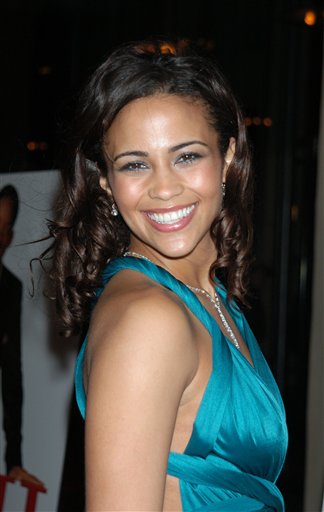
proves dangerous. Percival, meanwhile, is smitten with Angel (Paula
Patton, no relation to Antwan), a torch singer with a secret, who comes
to town on a temporary contract and finds herself caught up in the
ensuing uncertainty and conflict.
Writer-director Bryan Barber, a frequent music-video collaborator
and longtime friend of Outkast, knows the pair well enough to write to
their relative strengths, and not ask them to stretch too far beyond
their comfort zone. For Patton (the less screen experienced of the two)
this means a role shaped as much by those around him (including Bobb’e
J. Thompson as a younger iteration of the character) as Rooster’s own
actions; for Benjamin it means a nervous and introverted role that taps
into his soulful quietude. While full of plenty of crooked,
idiosyncratic detail, Idlewild, which got its start as an HBO
movie, doesn’t strive for an exacting historical accuracy so much as an
emotional truth, and in this regard it succeeds.
Where the movie really sings, though, is in its cathartic, mash-up
dance sequences, choreographed by Hinton Battle. Combining elements of
swing, jitterbug, break-dance and the Lindy Hop, these numbers shimmer
with unbridled joy and a pure, pleasing energy unmatched by anything
else on the big screen this year. Barber’s video-honed style, too,
feeds the story. While the beginning and end of the movie offer the
most stylized bits, he also deploys classic editing techniques, subtle
flashes of slow motion and fast forward throughout, and a soundtrack —
which includes a score from workhorse John Debney — that incorporates
various bleeps, scratches and modern high-hats folded into
period-inflected music.
While driven, especially early on, by an overt theatricality that
extends to many of its supporting performances (Faizon Love is a hoot
as blustering club owner “Sunshine” Ace), Idlewild locates a
balanced contrast in Percival, the heart of the film, and Benjamin
knocks this role out of the park with a perfectly measured performance.
If movies are indeed a siren call to the musical performer — who’s also
cameoed in Be Cool and given an equally grounded turn in Four Brothers — the unadulterated delight of Idlewild proves he has an equally felicitous future there. (Universal/HBO Films, R, 123 mins.)
Factotum
It would be the autobiographical novels Post Office, Women and Hollywood, along with, eventually, the 1987 movie Barfly — all searing portraits of a distinctly Southern California underclass — that would resonate worldwide and turn blue collar novelist and poet Charles Bukowski into a celebrated countercultural icon. The biographical drama Factotum, though, takes as its core Bukowski’s same-titled second tome, as well as excerpts from three other books, all centering around drunken roustabout Henry Chinaski, widely acknowledged to be the writer’s alter ego.
Directed by Norwegian filmmaker Bent Hamer (Kitchen Stories) and released this month through IFC Films, the movie is a rambling, episodic mock-biography of Bukowski, anchored by a fine, square-jawed starring performance from Crash‘s Matt Dillon. Like his creator, Chinaski swings through a wide variety of low-paying, non-creative, menial jobs (working at a bike shop, a pickle factory, as an ice deliveryman and janitor) and a smaller handful of codependent, quasi-abusive monogamous relationships (embodied here by Marisa Tomei as a fling, and Lili Taylor as on-again/off-again girlfriend Janet). Truly playing the field, you see, would take too much effort — as well as time away from Chinaski’s favorite mistress, the bottle. Through it all Chinaski pens short stories and sends them off blindly to a magazine in New York, subsisting on jug-wine and pancakes, cigarettes and melancholy.
Hamer has a penchant for fade-ins and -outs that will strike some as too affected, and the “story” here is undeniably paced like a snail, and at times willfully crude. (One amusing segment finds Chinaski getting his testicles delicately taped up into a homemade diaper after he contracts crabs from Janet.) Dillon, though, has in his age settled into a more mature, relaxed and naturalistic delivery, and he here approximates Bukowski’s deep, rumbling and inflected timbre — part wizened yet intoxicated preacher’s cadence, part sonorous bullshitter — in a manner that really gives you a window into Chinaski’s inherent glumness, his death-grip hold on misery. You get a palpable sense of how Chinaski’s (and thus Bukowski’s) acting out stems from his racing, perpetually dissatisfied inner monologue, and how his general disagreeableness and bad attitude toward those around him is hardwired to an irreconcilable urgency to locate in both life and his art the same sort of forward-leaning insistence he feels in his soul.
For Bukowski, writing was living. An arthouse curio, Factotum isn’t for all tastes, but it’s studded with dark delights (Chinaski stalking one employer, trying to score a check for a half-day’s work), and it conveys with unflinching precision the life of a dinged, beaten-down spirit for whom creativity wasn’t just an impulse but rather a compulsion. (IFC Films, R, 94 minutes)Anathema: A Moment in Time
The
subgenre of metal music has such an aggressive and narrow public image
that when I settled down with this concert disc from Liverpool natives
Anathema — their performance from March 2006’s Metalmania Festival — I
wasn’t quite sure what to expect. Its willfully ambiguous cover
provided me no comfort or assistance. A pleasure to report, then, an
hour-plus show with a complicated underbelly, far from the empty
screaming that marks the worst of atmospheric goth metal.
Fronted
by guitarist-vocalist brothers Vincent and Danny Cavanaugh, Anathema
formed in 1990 under the moniker of Pagan Angel. Their journey to
soaring ethereal soundscapes, imbued with keyboards and moog-distorted
vocals, was apparently a winding one, but also one with an undeniably
rewarding point of conclusion. Whereas the empty posturing of so many
“heavy” bands is to me a turnoff, Anathema has both the musicianship
and the wisdom of age to pull off what is a much more mature and
interesting sound — driving guitars and drumwork laid under sparse melodies. It’s deeper and more textured work than many of their contemporaries.
Opening with a Brahms-influenced, three-minute string introduction
from the Bacchus Quartet, whose members include noted BBC Philharmonic
violinist David Spencer, the band’s 68-minute set charts all of their
best material, and concludes with a cover of Pink Floyd’s “Comfortably
Numb.” That group, as well as Rush, Skycycle and the Black Horses, are
all good points of reference, as a roiling, slowly building sound marks
the best efforts here, which include “Panic,” “Shroud of False,”
“Closer,” “A Natural Disaster” and “One Last Goodbye.” (“Fragile
Dreams,” meanwhile, is carried along by a simply fantastic and subtle
guitar riff.) Drummer John Douglas plays alongside a stuffed dog
throughout, and Cavanaugh engages an alert and accessible audience, who
really get into the music.
Housed in a clear Amray case on a single disc, Anathema: A Moment in Time
is presented in a clean, 1.66:1 anamorphic widescreen transfer, with
Dolby digital 5.1 and Dolby digital 2.0 audio tracks. A small
collection of supplemental extras feature a clutch of Web links, a
photo gallery, desktop images and four bonus video cuts (including a
cover of Fleetwood Mac’s “Albatross”) from a 2004 Kraków show, but the
best inclusion is a 22-minute interview in which the brothers Cavanaugh
discuss various parts of their musical inspiration (Live Aid ’85 was a
kickstarter) and influences, which include usual suspects like Led
Zeppelin, U2, Pink Floyd and Black Sabbath but also, interestingly
enough, Dire Straits. The title is also apparently available in a
limited edition DVD/CD swing case, with the CD containing the same cuts
as presented here in audio-visual form. B (Show) B- (Disc)