Category Archives: Blu-ray/DVD Reviews

My Summer Story

I’m not sure how this escaped my knowledge for so long, but the TBS holiday staple A Christmas Story — the holiday movie “for the rest of the us” — in fact spawned an off-season sequel, 1994’s My Summer Story.
Instead of BB guns and provocative lampshades, though, this tale of
humid nostalgia tackles top-spinning contests, foreclosure auctions,
fishing trips and family feuds, while also still retaining a bullying
overlord presence to torment our protagonist.

Yes, the famed
role of Ralphie Parker played by Peter Billingsley in the original
movie is here embodied by Kieran Culkin, and Charles Grodin and Mary Steenburgen play his parents. (As younger brother Randy, Christian
Culkin doesn’t really have much to do.) The film, of course, dates
itself with its references to candy (six Mary Janes for a penny?!), and
its scope is a bit less convincing, but fans of A Christmas Story
will recognize and enjoy writer-director Bob Clark and source-material
author Jean Shepherd’s characteristically wry narration
. “When the old
man was in a good mood, he gave me nicknames like ‘Rubber Band’ and
‘Spare Tire,’” notes Ralphie at one point. Later, after Ralphie and his
pals Flick (Geoffrey Wigdor) and Schwartz (David Zahorsky) have to
purchase yucky red jawbreakers in order to obtain black ones, a moment
of reverie comes in the form of the following voiceover: “With the
proper cheek tension, the soul-satisfying taste of those ebony
masterpieces began to course through our veins, and it was almost worth
the years of impacted wisdom teeth that were to follow.”

The film’s set pieces are a bit less memorable and smoothly staged
than the original
— Ralphie challenges sneering bully Lug Ditka (Whit
Hertford) to a duel involving spinning tops, and his dad blasts their
hillbilly neighbors with classical music, only to suffer a hoedown as
retaliation — but it’s humorous and on-point the way that Ralphie views
fishing with his dad as a grand entrée to the adult world. The only
other beef I really have is Grodin. No doubt hired because he exudes an
irascible nature — put nicely to use for kids in the Beethoven
films — here he just seems like an awkward fit, missing the subtleties
of Darren McGavin’s gruff, bluffing demeanor
by playing things far too
broadly.

Housed in a regular Amray case, My Summer Story is presented
in 1.85:1 anamorphic widescreen, enhanced for 16×9 televisions, with an
English 2.0 stereo track and optional English subtitles. Apart from
previews for other Sony releases (including the forthcoming bow of
Sony’s in-house animated branch, Open Season), there are
unfortunately no supplemental extras on this DVD
, leaving an empty hole
for those seeking an additional nostalgic fix through some comments
from Clark, perhaps. Overall, My Summer Story is decently in step and of a piece with its family-friendly predecessor, though not quite on par. B- (Movie) C- (Disc)

Third Man Out

It’s
great, I think most of us would agree, that we’ve reached a point where
to be gay on screen doesn’t necessarily mean flamboyantly prancing
about
— though Sean Hayes certainly did homosexuals no favors in this
regard on Will & Grace. A case in point, though, arrives in the form of Third Man Out,
a straightforward-to-the-point-of-somewhat-flawed procedural starring
erstwhile TV pin-up Chad Allen as a gay detective caught up in a
ripped-from-the-newspapers crime story.

The title passingly evokes The Thin Man,
and purposefully so. Director Ron Oliver says in the opening moments of
a 15-minute interview compilation at movie’s end that he saw the chance
to make “a gay Nick and Nora mystery” out of author Richard Stevenson’s
serial novels
as an opportunity he couldn’t pass up. To this end, the
story centers here on Allen’s Donald Strachey, which one character
notes is “the only gay private eye in the capital area, maybe all of
New York state,” which is kind of doubtful. Still, when Strachey is
reluctantly drafted into protecting a gay activist, John Rutka (Jack
Wetherall), known for “outing” prominent citizens, he encounters a
mystery much deeper and more dangerous than he initially suspects. When
Rutka eventually turns up dead, Strachey must sift through an extensive
list of enemies, all with plenty of motive.

The dialogue and acting here are of above-average quality, though
the actual story itself and directorial execution — though obviously
done on a shoestring budget — are a bit less than stellar, suffering
from a certain obviousness
. Third Man Out works to the degree
that it does because of the careful balance in tone. Its characters are
quippy, but not flip or derisive; its tone turns dangerous, but never
so menacing as to make everything else feel out of sorts. All in all,
gay and metrosexual Law & Order fans will find ample reward in this title
, which also costars Sean Young and Woody Jeffreys.

Third Man Out sees release from Genius Entertainment alongside the first season of Dante’s Cove, a sort of mash-up of the pre-hysterical bitchery of Melrose Place (there was a time, believe it or not) and Buffy the Vampire Slayer,
wherein surf culture and gothic horror are interspersed with
supernatural mystery and quotidian relationship struggles
. Again, both
titles score points by not overly doting upon many of the struggles
traditionally associated with being gay — and particularly found in
sermon-to-the-choir independent film, I’m afraid to report — but
instead simply presenting their characters as professionals who
incidentally happen to be gay.

Third Man Out is presented in what is billed as 1.78:1
widescreen (though it looks more like 1.66:1, to be honest), with Dolby
digital 5.1 surround sound and stereo audio mixes. The aforementioned
production featurette is the sole bonus feature, but it does thankfully
cover a good bit of ground
. There’s a lot of frank discussion and broad
range of opinion on coming out, including Allen talking about his
attempted real-life extortion at the hands of a tabloid. Gay adult star
and Third Man Out bit player Matthew Rush, meanwhile (who here,
yes, plays a porn star), pops up to offer this hilarious nugget of
wisdom: “I’ve been doing a lot of stage work over the past two years,
and also adult movies, and they’re very different.” Umm, no kidding —
really? To purchase the film via Amazon, click here. C+ (Movie) C+ (Disc)

The Flying Nun: The Complete Second Season

It’s
become a bit of a joke in the subsequent years, even though its title
and premise seemingly augur a successful big screen adaptation in these
culturally tapered times, or at least some completely unironic, “red
state”-baiting small-screen telepic. Yes, it’s The Flying Nun,
and it’s quite dated, sure. But there’s a certain perplexing charm
often associated with seeing stars bring their talents to bear in
projects prior to their ability to more fully exercise significant
(read: staid) personal choice, and that can certainly be said of Sally
Field and The Flying Nun
.

Starring Field as bubbly,
90-pound novice nun Sister Bertrille, who uses her “jet” cornet and
ability to become airborne to stir up trouble at Convent San Tanco in
Puerto Rico, the series became an unlikely hit after being initially
rushed into production to avert the expiration of a holding deal on its
star. Although her aims are always benevolent, Sister Bertille’s means
are frequently bemoaned by Mother Superior (Madeleine Sherwood),
leaving her fellow nuns (a group including Shelley Morrison, Marge
Redmond and Linda Dangcil) to frequently help cover for her.

All 26 episodes of the show’s second season, spanning 1968 and ’69,
are included here, many of which are written by Arthur Alsberg, who
would go on to pen Herbie Goes to Monte Carlo and Hot Lead and Cold Feet

and give the loose-limbed, ever-jocular pitch and tone of those efforts
a fair workout here. The episodes are fairly self-contained, so the
show runs a little bit hot and cold qualitatively, sailing by thinly on
Field’s charms. Among the more notable episodes are “The Rabbi and the
Nun,” in which the sisters sing “Hava Nagila” at a Jewish wedding in
the convent garden; “Cast Your Bread Upon the Waters,” in which the nun
goes into the bakery business to help raise funds; and “To Fly or Not
to Fly,” in which Bertrille actually tries to stay grounded for
solemnity’s sake. Other shows — involving hypnosis, kleptomaniac
monkeys and kitschy songwriting gambits — come off as either forcedly
wacky or otherwise uninspired.

The Flying Nun: The Complete Second Season is housed on three
discs in two slimline plastic cases, which are in turn stored in a
brightly hued cardboard slipcase. As with the release of its inaugural
season, all the episodes herein are presented in their original
full-frame aspect ratio; audio tracks are in English, Spanish and
Portuguese, with optional subtitles in the latter two languages as
well. Field sat for an interview on the previous DVD release of the
first season, but unfortunately there are no episodic commentaries or
extra material
from that sit-down included here, a bummer for those
seeking an additional nostalgic fix. C (Show) C (Disc)

Felicity’s Sexual Awakening

The
old handle of “a young girl’s sexual awakening” is typically shorthand
code for softcore crap
, but it holds factual and genuine in this
Australian import, widely regarded as the English language Emmanuelle, but in fact superior to that better known film.

Glory Annen (sorry, not Keri Russell) stars as Felicity Robinson, a
sheltered teen who surrenders her blossoming body to a world of bold
sexual adventure
. It starts with some same-sex canoodling at an
all-girls Catholic boarding school in the countryside, and eventually
moves on to all sorts of exotic underground settings when Felicity goes
to Hong Kong. The odyssey includes hook-ups both scandalous and public
(a bus, movie theater, beach, etc.), and culminates in a love affair
with young Miles (John Michael Howson). It’s a legitimate journey, in
other words. Shocking, I know…

As directed by John Lamond — who also co-wrote the 1979 film with his wife — Felicity
idealizes sex, yes, but in an alluring and quite pretty way
rather than
in crude or graphic fashion. The film’s nudity is copious, but the love
scenes don’t at all drag on. They’re all grounded in the story, the
galloping thrill of sexual discovery
. The scenery, meanwhile, is
flat-out beautiful, with wide natural vistas of both day and nighttime,
country and city. Lamond goes the extra mile in both indulging a
location shoot with real extras of said areas, but also paying
attention to the other elements of filmmaking — artistic framing,
interesting shot selection and evocative music — that often get the
proverbial shaft in movies of this ilk. What holds this movie together,
though, is Annen, who gives a performance both fetching in the basest
sense but also psychologically rooted in the commingled implication of
shame and pleasure.

Distributor Severin’s sterling, colorfast, 1.85:1 widescreen DVD
presentation has very minimal grain, and includes both a Dolby digital
audio track and a feature-length audio chat with Lamond and Annen, who
jointly discuss in a very thoughtful and straightforward fashion their
collaboration on the film, and the state of erotic filmmaking today.
It’s also quite a shock and further delight to find out that Annen
isn’t even Australian (she was born in Ontario), and her accent in the
film is in fact another testament to her talent. For fans of classic
erotica
, it indisputably doesn’t get much better than Felicity, a legitimate film that also happens to be sexy as hell. B (Movie) B- (Disc)

L’Enfant

Brothers
Jean-Pierre and Luc Dardenne came up shooting a variety of
documentaries about World War II and the Nazi resistance, so it’s no
surprise that their work has always had a grimy, unsparing immediacy
born of the real world
. They first really burst onto the narrative
feature scene in 1996 with La Promesse, a searing social drama
about a super and his disaffected son who rent apartments to illegal
immigrants and take advantage of them in more than tacit fashion. Three
years later brought more acclaim in the form of Rosetta, a
movie that centered on a Belgian girl’s struggles with both her job and
her alcoholic mother; it picked up the top prize, the Palme D’Or, at
that year’s Cannes Film Festival.

L’Enfant continues the
brothers’ dual preoccupation with adolescence and the effects of
poverty and social-welfare rejects
, pitching us deep and downward into
the life of Bruno (La Promesse’s Jérémie Renier), a down-and-out
petty thief in a small town Belgium who commands a gang of younger
hooligan pickpockets and panhandlers much like an authoritative pimp
casually directs his harem. Bruno hits rock bottom when he sells his
newborn son to a black market adoption broker, telling his devastated
girlfriend Sonia (Déborah François) that he thought they’d just have
another. Finally realizing the error of his ways, Bruno has a
humanistic awakening of sorts
, setting out to try to undo his callous
deed in a manner that leads to a powerful personal transformation.

While not quite on par with either La Promesse or what might be their best work, 2002’s The Son, L’Enfant
nonetheless remains a convincing work in no small part because of its
makers impassioned compassion and ability to locate virtuousness in the
midst of despicable behavior
. Their affinity for the grubby and
downtrodden could have the ability to come across as cloying and false
were it not for the Dardennes’ unsentimental, matter-of-fact style, and
an actor with whom they are so wholly on the same page as Renier, who
delivers a memorable performance.

Housed in a regular Amray case, L’Enfant is presented in
1.66:1 anamorphic widescreen, preserving the aspect ratio of its
original theatrical exhibition. A slight graininess mars the transfer,
but feeds the threadbare narrative rather than detract from the
proceedings. The audio arrives courtesy of a French language Dolby
digital 5.1 track, with optional English and French subtitles. In the
disc’s only supplemental extra, the Dardennes sit for a moderate
on-camera interview for a radio program, and discuss the genesis of the
idea for the movie and the consistency of their production techniques
.
For foreign-language film fans, L’Enfant is a worthwhile rental. B (Movie) C+ (Disc)

Harry Knuckles and the Pearl Necklace

What kind of folks would make a movie titled Harry Knuckles and the Pearl Necklace, you might ask? Well, the same kind whose previous credits would included a movie entitled Jesus Christ: Vampire Hunter, of course.

A
slapdash, silly, low-budget Canadian spy spoof
, the film centers around
the titular secret agent (Phil Caracas) and his partner El Santos (Jeff
Moffet), whose quest is to track down a valuable missing necklace. Over
the course of the movie, this means showdowns with a hinterland horror
known as Bionic Bigfoot and a team of Amazonian assassins, among many
other trials and tribulations. Fish nunchakus and copious affected slow
motion are also deployed.

Writer Ian Driscoll and director Lee Demarbre have a deep affinity for kung-fu shenanigans, and Harry Knuckles and the Pearl Necklace is full of the same type of marginally choreographed rows. Caracas — returning from Jesus Christ: Vampire Hunter
as well — gives his character a certain goofy charm, but execution and
tonal consistency are the big bugaboos here
. What glues the movie
together more than any sense of slapdash style is its breathlessly
anarchic tone. In Driscoll and Demarbre’s DIY world, continuity
problems are best incorporated and made fun of within the flow of
things, rather than painstakingly ironed out. This works a few times,
but eventually drags things down, because it just seems lazy.

Harry Knuckles and the Pearl Necklace is at its best — a
term loosely applied — when dashing mindlessly over and around all
obstacles, but the movie’s running time, at just under two hours,
belies this model of brevity-as-virtue, and the “action” herein is far
too large a piece of the pie
. People don’t want to sit through
low-budget films for more than a scene or two of inadequately staged
action; you have to woo them with ideas. This film has some, but
they’re not as entertainingly explored as in the filmmakers’ previous
work.

Housed in a regular Amray case, Harry Knuckles and the Pearl Necklace
is presented on a region-free disc in a full-screen transfer that
preserves the imperfections of the movie’s 16mm production alongside a
Dolby digital 5.1 English track that’s a definite step up from the
visual plane of the movie. Cast and crew alike sit for an
audio-commentary track, and a 23-minute making-of documentary graces
the roster of supplemental material
, along with a 25-minute 1999 short
film, Harry Knuckles and the Treasure of the Aztec Mummy, that
serves as this feature’s predecessor. There’s also nine minutes of
footage from the film’s Ottawa premiere, meaning plenty of comical
pronunciations of the word “aboot,” as well as interviews with on-queue
fans and Demarbre’s mother. Alas, even proud mothers of those involved
might have some problems looking past the unevenness and wan double
entendres of Harry Knuckles and the Pearl Necklace. D (Movie) B- (Disc)

Broken Saints

Billed as an animated comic epic, Broken Saints
summons to mind myriad questions about form and entertainment. What
constitutes a movie or series? In the ongoing dialogue between the
comics and graphic novel industry and their Hollywood suitors, what
unique structural elements are inherent to each format? And where, too,
does original Web content fit into all of this?

Running over 10 hours and spanning two dozen episodes, Broken Saints
got its start on the Internet, where it was an original and independent
serial effort on an eponymous Web site. Fusing anime style and
comic-book text with more traditional cinematic effects and production
technique
, the hypnotic and surreal fantasy/horror epic here gets a
full-blown DVD treatment, one that may hook new fans who appreciate
being able to enjoy in larger, discrete segments episodes, ranging in
length from nine minutes to a finale that, at 83 minutes, touches
feature length.

Written and overseen by creator Brooke Burgess, the story centers
around four strangers who each receive a sequence of chilling
apocalyptic visions. Drawn together from the corners of the Earth to a
single city, they come to find their fates are inexorably tied to one
another, and to a conspiracy involving a global satellite network and a
mysterious orphan girl with a terrifying secret. Their fates in turn
inform that of the world at large. Will they stand up to face the
encroaching darkness? And if so, at what individual price?

Broken Saints is reminiscent at least on some level of the old Aeon Flux
animated series on MTV, in that its conspiracy-dipped and
paranoia-tinged narrative is married to a style at once florid and
gracefully simple
. The full breadth of innovative artistic effort on
display here is certainly impressive, and sometimes quite mesmerizing.
But the series as a whole is waterlogged by emotionally distant
metaphor and an obdurate devotion to flowery, cryptic prose that
prevents much accrued downhill momentum. (A mercifully succinct sample:
“I hear the ocean serenading the soft white sand and feel the warm sun
cradle its children. The trees beckon with gifts of fragrance, fruit
and shelter.”) The combination, too, of voiceover narration (The X-Files
William B. Davis and Michael Dobson are among the voice talent) and
comic-book-style thought and spoken-word bubbles, is just a strange one
to get used to, at least for the length of the project here. The purred
meta-physical and philosophical musings herein swallow the story, and
the series’ running time kills off any sense of lasting wonderment
.

Regardless of what one might think of the program, Broken Saints
is packaged and presented in an undeniably groundbreaking and
interesting fashion, one that definitely feeds its cutting-edge image
.
With 24 episodes presented in 1.66:1 widescreen and over five hours of
supplemental material spread out over four discs, the series is a
mini-marvel of technical savvy and prowess — clean, clear and
streamlined. The set’s packaging unerringly continues this theme, with
an inch-thick binder housing four glued-in plastic trays, and in turn
slipping (topside) into a clear plastic case that features four
attached, double-sided, cardboard corner sleeves featuring characters
from the series.

The disc’s menu screen cheekily boasts of “tasty trailers and a
bounty of BS featurettes,” and it’s not kidding. Creator Burgess sits
for full series audio commentary, while a 19-minute production
featurette includes chats with camera-shy technical director Ian Kirby
and many others
. Fan films, other behind-the-scenes featurettes,
documentaries and interviews only extend the immersive experience. On
the downside, so dense and crammed with content are the discs that the
menu screens are sometimes a bit slow, particularly when toggling
between episodic selections, which are replete with description. C (Show) A (Disc)

Alice in Wonderland

Alice in Wonderland
has a glowing reputation as one of the greatest adolescent fantasies
ever, but most of that emanates from Lewis Carroll’s beloved children’s
books, and not necessarily the 1985 live-action small-screen production
of the same name
. Though Emmy-nominated and star-stocked,
master-of-disaster producer Irwin Allen’s version musters only
fleetingly hallucinatory and largely inadvertent amusements
, leaving
one to turn back to Carroll’s classics for consolation.

Directed by Harry Harris (television’s Fame), Alice in Wonderland mashes both the titular tale and Through the Looking Glass
together into one 190-minute movie. Young Alice’s (Natalie Gregory)
adventures begin when she gives chase after a very unusual White Rabbit
(Red Buttons) and stumbles into a world that grows ever curiouser and
curiouser. As she tries to find her way back home, Alice attends a tea
party with the Mad Hatter (Anthony Newley), plays a strange form of
croquet with some unusual royalty and meets a Cheshire Cat (Telly
Savalas), a Mock Turtle (Ringo Starr!) and, of course, Tweedledee and
Tweedledum (Eydie Gormé and Steve Lawrence, respectively). Grammy
winner Steve Allen, the original host of The Tonight Show,
provides the movie with an array of songs, and the rest of the
bizarrely cobbed-together cast includes Shelley Winters, Ernest
Borgnine, Sammy Davis Jr., Beau Bridges, Sid Caesar, John Stamos, Pat
Morita, Karl Malden, Sherman Hemsley, Sally Struthers, Jack Warden and
Carol Channing, who I have to admit really freaked me out as the White
Queen.

Carroll’s novels work so well precisely because of the fashion in which they stimulate flight-of-fancy imagination, and Alice in Wonderland
almost immediately paints itself into a corner with the forced
whimsicality of its interpretation; it becomes a forced march of
reliably unreliable star cameos
. The art and production design are
certainly nice achievements for its era (it was notably here, after
all, that the Emmys rewarded it, with nods for Art Direction, Costume
Design, Makeup, Hairstyling and Sound Editing) and a few of the musical
numbers stand out above the fray, but just as many are creepy (Savalas’
“Meow Baby”) and misguided. By and large the movie is an excruciating
tour of duty that feels like a series of sketches strung together at
some awful awards show rehearsal holding pen
.

Housed in a regular, white Amray case, Alice in Wonderland is
presented in 1.85:1 anamorphic widescreen, with a Dolby digital 5.1
English language track. There are no supplemental extras here, though
the quality of the picture transfer is fairly solid. In addition to its
solo offering, Alice in Wonderland will be available in a two-pack DVD set with the 1965 version of Rodgers & Hammerstein’s Cinderella, starring Lesley Ann Warren, Ginger Rogers and Jo Van Fleet. D+ (Movie) D+ (Disc)

A Canterbury Tale

Michael
Powell and Emeric Pressburger’s 1944 film is a profoundly personal
retelling of Chaucer’s famous literary tale of pilgrimage
, made
relevant and current because of its contextual resituating in a
Nazi-threatened England.

The film gracefully segues from its
brief period prologue to the tumult of Great Britain in August, 1943,
where it focuses in on three modern-day incarnations of said wanderers.
First is plainspoken American army sergeant Bob Johnson (played with
folksy charm by John Sweet), a genial Oregon native who gets off at the
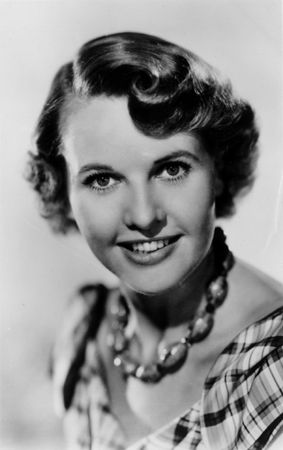
wrong train stop. We also meet Alison Smith (a pleasantly pie-faced
Sheila Sim
), a melancholic London shop clerk who’s signed on to work at
a local rural farm after her fiancé has been killed in the war, and
abrasive, upper crust Englishman Peter Gibbs (Dennis Price), also a
sergeant in the military as well as a cinema organist. Teaming with
local squire Thomas Colpeper (Eric Portman) to solve a series of
bizarre assaults that play as only slightly subdued sexual metaphor —
someone’s dousing women’s hair with glue, and fleeing — Bob, Alison and
Peter make their way to the mythical town of the title, each finding a
bit of redemption along the way.

Though later released in a truncated American cut, this original version of A Canterbury Tale
showcases the full latitude of Powell and Pressburger’s ambling
rhythms
. Mixing perversity and pastoralism in unusual fashion, it’s a
movie that’s both beautiful to look at and also elliptically evocative.
While it at least partially and irrevocably remains a document of its
time and place, A Canterbury Tale also showcases the luminescence of dinged humanity amidst discord and turmoil
.

Spread out over two discs and available in a thicker-than-usual Amray case, A Canterbury Tale
is presented in 1.33:1 full frame with an English language mono track,
and while the transfer is a fairly solid one with respect to color
levels, there is still some grain and surface scratching throughout.
Optional English subtitles are also available. Film historian Ian
Christie sits for a feature-length audio-commentary track crammed with
production minutiae, and there are also two six-minute excerpts from
the aforementioned American version of the movie
, with Kim Hunter
playing Bob Johnson’s Stateside bride to be.

The film’s second disc includes a new, 20-minute video interview
with Sim
, who warmly recalls the production. There’s also a 2001
documentary by Nick Burton and Eddie McMillan, John Sweet: A Pilgrim’s Return
,
which documents its subject’s first return to England in more than 55
years. David Thompson’s superb, 24-minute production doc A Canterbury Trail,
meanwhile, delves into plenty of biographical detail about Powell’s
adolescence. Alongside a booklet featuring essays from Graham Fuller,
Peter von Bagh and the recollections of neophyte actor Sweet, is the
1942 doc Listen to Britain, full of wartime sights and sounds, and a 2001 video-installation piece of the same name from artist Victor Burgin. B (Movie) B+ (Disc)

The Shaggy Dog

The leap from small-screen stardom to silver-screen viability is a tough one, as former Home Improvement star Tim Allen’s movie career amply demonstrates. Built chiefly on the foundation of two franchises — Toy Story and The Santa Clause
— in which he is either not seen at all or seen in heavily
prostheticized form, Allen is one of those guys who paying audiences
seem to be able to take or leave. Many films in which he’s taken a more
decidedly straightforward human form (2001’s Joe Somebody, the following year’s Big Trouble) have flat-out tanked, with Galaxy Quest — in which he anchored an estimable ensemble — being the notable exception. The Shaggy Dog,
then, further extends Allen’s status as distributor Disney’s adult-male
counterpart to Lindsay Lohan — which is not to say a serial partier and
late arriver on set, but the star of remade in-house properties
.

Upping the antics and, of course, the CGI, The Shaggy Dog
did decently for Disney at the box office this spring, but, call me
old-fashioned, there’s something more inherently charming about the
low-fi 1959 original
, based on Felix Salten’s novel and starring Fred
MacMurray. It helps that in that movie it’s not MacMurray who
actually suffers the self-pawing indignity of the magical
transformation into the titular canine, but instead his son Wilby
(Tommy Kirk). Here, though, Allen is workaholic lawyer (and animal
loather) Dave Douglas, who never quite has enough time for his wife
Rebecca (Kristin Davis), his son Josh (Spencer Breslin) and his
activist teenage daughter Carly (Zena Grey). Things change, though,
when the bite of an immortal Tibetan dog (yes, you read right)
transforms Dave constantly back and forth, and pits him — via a series
of constant misunderstandings and botched explanations of his
predicament — against an evil pharmaceutical company out to extract an
anti-aging serum.

Director Brian Robbins brings a deft, light touch to the staging of
the material and Robert Downey, Jr. has a blast as the unprincipled Dr.
Kozak — watching him here makes you realize what a great strictly kids’
performer he could be — but Cormac and Marianne Wibberley’s (I Spy, National Treasure) script never really gels and comes up with many scenarios beyond the expected. All in all, The Shaggy Dog
is exactly the movie you anticipate it to be, almost to the scene. If
dutifully fulfilled requirements in the name of a moralizing family
narrative still floats your boat, then so be it
.

Housed in a regular, white Amray snap case, The Shaggy Dog
comes with a paper insert listing chapter stops, and is presented in
the viewer’s choice of 1.33:1 full screen or 2.40:1 widescreen, the
latter enhanced for 16×9 televisions. A Dolby digital 5.1 surround
sound English language track anchors both releases, along with French
and Spanish subtitles, while the full-screen version also includes
French and Spanish 2.0 audio tracks.

As far as supplemental features, a four-minute collection of deleted
scenes is put forth, along with a brief segment which purports to offer
up translations for dog’s bark
. (Without benefit of a canine, I was
unable to put this featurette to the test.) Director Robbins and
producer David Hoberman’s glad-handing audio-commentary track is
available on the widescreen version of the movie
, and centers mainly
around general, and genial, production anecdotes. A
two-and-a-half-minute blooper reel
— showcasing Allen’s nervousness
with some of the animals and Downey, Jr. cracking up over several lines
— and sneak peeks at other Disney titles round things out. C (Movie) B- (Disc)

White Coats

Former SCTV
founding member Dave Thomas (no, not the dead Wendy’s founder) drops
multi-hyphenate skills in this hospital-based laffer, previously known
as Intern Academy. While not without its broad moments — the very obvious rip-off, err… template here is Scrubs — the movie works well enough as a comedy of colorful relationships, and should thus provide amusing counterpoint to fans of Grey’s Anatomy, which has, of course, supplanted ER as the dominant surgical soap of the American small screen.

Written and directed by Thomas, White Coats
is set at St. Albert’s Hospital, where a budget crunch has driven away
most of the top talent and forced philandering administrator Dr. Cyrill
Kipp (Dan Aykroyd) to sell off equipment to keep things going. This
leaves Dr. Omar Olson (Thomas) on the front lines with a group of five
interns to grapple with lost patients, bizarre emergency-room cases and
the like. It’s here that the movie spends most of its time and focus,
charting the personal foibles and back stories of its young charges

(the neurotic, the hottie working her way through med school by
stripping, et al) by bouncing them off one another in randy and/or
otherwise charged fashion
, all while also still allowing for some
showcase fun from Thomas’ considerable roster of friends, including
Dave Foley, Matt Frewer, Saul Rubinek and Maury Chaykin.

Housed in a regular Amray case, White Coats is presented in
1.85:1 anamorphic widescreen, with a Dolby digital 5.1 English-language
track. Additionally, the case lists optional English subtitles, but
both English and Spanish subtitles are available, though, in a glitch, the former switches to
Spanish roughly three-fifths of the way through the feature
.
Thankfully, no such malfunctions mar Thomas’ delightful
audio-commentary track, in which he discusses the inspiration for the
movie, the difficulties inherent in mounting a homegrown Canadian
production and the film’s Edmonton, Alberta shoot, chiefly on location
in an abandoned hospital. He also winkingly acknowledges the beseeching
insistence of financiers and other producers to include some nudity in White Coats, and how this eventually led to the subversive inspiration for the flesh that the film does ultimately bare.

Other supplemental extras include a nice chunk of behind-the-scenes
footage and a 10-minute gag and gaffe reel
, which replicates some
material that runs under the closing credits. There’s also a collection
of trailers for other First Look releases, and 13 minutes of cast
auditions for three of the interns — Viv Leacock, Ingrid Kavelaars and
Christine Chatelain. B- (Movie) B- (Disc)

I’ll Always Know What You Did Last Summer

Released in 1997, I Know What You Did Last Summer had the heat and cachet of an adaptation of Lois Duncan’s teen-friendly novel by Scream
screenwriter Kevin Williamson
, as well as the mushrooming star appeal
of Sarah Michelle Gellar and Jennifer Love Hewitt. (For the ladies,
there was also Ryan Phillippe and some kid named Freddie Prinze, Jr.,
who I’m now convinced was an aberrant, late ’90s collective
hallucination on the part of teenagers and Hollywood casting
directors
.) After a $72 million domestic gross, its
rushed-into-production sequel attempted to urbanize things with the
addition of Mekhi Phifer and pop-singer-turned-reciter-of-words Brandy
Norwood, the result being diminished returns across the board.

the decidedly less buxom I’ll Always Know What You Did Last Summer,
arrives with a cast of unknowns, but definitely less of a creative thud
than one might expect
. Still, the point is that the original I Know What You Did Last Summer
(which came out when one of this sequel’s costars, Torrey DeVitto was
13) wasn’t a movie predicated on twist or concept — it was a star
vehicle, albeit a collective and relatively minor one. This film
doesn’t have the dangled promise of any known cleavage — or much
cleavage at all, really — and as such will find a hard time
establishing any sort of commercial beachhead, even in the
straight-to-video market.

Distancing itself from the first two movies, I’ll Always Know What You Did Last Summer
finds its requisite group of teens pulling a July 4th prank
based on
the urban legend of those characters. When things go wrong, though, and
a friend ends up dead, Amber (Brooke Nevin), Colby (David Paetkau), Zoe
(the aforementioned DeVitto), Roger (Seth Packard) and Lance (Ben
Easter) are devastated. Flash forward a year, when someone begins
stalking them and telling them they know about their dark, shared
secret.

Director Sylvain White utilizes a variety of in-camera cuts to up
the movie’s frenetic pacing
, and though the angsty panic that this
flash technique induces eventually morphs into overpowering music-video
affectation, it’s at least a bit different than the sort of hopelessly
straightforward rendering one might expect. White is aided in this
regard by veteran cinematographer Stephen Katz (the original The Blues Brothers), who does a great job of evoking mood on a budget; it’s not at all a stretch to say that I’ll Always Know What You Did Last Summer
has the more mannered look and feel of a European film, and White and
Katz deploy an effective array of practical “trick shots” usually not
indulged in such a movie. At the same time, while I won’t spoil the
final revelatory twist, it does feel like a reach, and would drag the
franchise in the wrong direction if ever followed up upon in the same
vein.

Packaged in a regular Amray case, I’ll Always Know What You Did Last Summer
is presented in a solid, 1.85:1 anamorphic widescreen transfer, with an
English language Dolby digital 5.1 audio track and a French language
Dolby surround track. (Optional English and French subtitles are also
available.) Special features include a feature-length audio-commentary
track in which director White details the movie’s cold Park City, Utah
shoot
(which substitutes for summer in Colorado) and his attempts at
subtly tweaking genre expectation. There’s also a hearty, quite nice
27-minute making-of featurette
which provides an array of on-set
footage and interviews with cast and crew, including veteran stuntman
Don Shanks (Halloween 5: The Revenge of Michael Myers), who plays the menacing, hook-wielding fisherman. C (Movie) B- (Disc)

The Girls Next Door: The First Season

It’s a not particularly well-kept secret that most men under 50
years of age — given the opportunity — would happily spend the entire
day looking at pictures of scantily clad and/or naked women on the
Internet. It’s also inevitable, really, that as reality television has
gotten bigger and bigger, there would be a series that would eventually
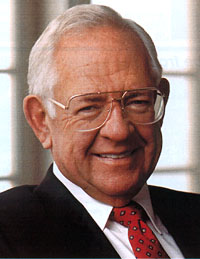
lead us to the doorstep of Playboy founder Hugh Hefner
, and inside his namesake mansion. These two things dovetail nicely in The Girls Next Door,
the jiggly, wealth-flaunting cable series centered around Hefner, his
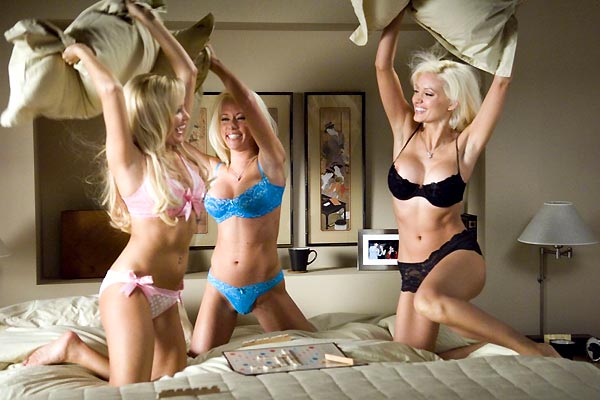
trio of blonde live-in girlfriends and their ring-a-ding lifestyle.

The
three women in question are the now-21-year-old Kendra Wilkinson, Holly Madison, 26, and Bridget Marquardt, the grand dame of the group at 32
years of age. As one might imagine for the concubines of a millionaire
retiree, there aren’t exactly many taxing occupational demands or
worried conversations about how they’re going to pay the gas bill this
month
. Instead there’s an abundance of premium-quality leisure
activity, so the 15 episodes included here chart all manner of
lounging, partying and cheery beverage sipping, from a trip to Las
Vegas, an AFI salute to George Lucas and a wine-tasting jaunt to
Northern California to “fight night,” Hefner’s famous Midsummer Night’s
Dream party, celebrating Kendra’s 20th birthday and more. In fact,
based on all this evidence, I’d confidently estimate that the girls
spend a good 30 percent of their lives posing for pictures
. And another 15 percent pillow-fighting.

Sold in a cardboard slipcase that houses three slimline cases and three discs (one for each lady!), The Girls Next Door: The Complete First Season
is presented in 1.33:1 full screen, with optional English and Spanish
subtitles. Bonus features include more than 50 minutes’ worth of
un-bleeped and un-blurred deleted scenes, audio commentaries with the
girls, network promos and a voluminous (though tasteful) photo gallery
.
In addition to the shock of some of these many dozens of photos
featuring the women in full clothes (including jeans!), two pictures in
particular of Hefner cracked me up. In most photos, of course, Hef has
that same dignified and extremely photogenic look — it feeds his image
as pleasant and avuncular, yet still unattainable to folks like you and
I. In one here, though, from what I presume to be a costume-themed pool
party, he has on Bettie Page print shirt and a ball cap cocked to the
side, b-boy style. In another… well, there’s no polite way to put this:
he looks like a grinning idiot. It’s the exact look you would expect on
the face of someone crashing the gates of the Playboy mansion, and it
made me laugh out loud because I think this is the first photo of its
kind that’s slipped through the steely, image-vetting clutches of the Playboy machine
.

The real… I don’t know, shock, or maybe jaw-dropping and wincingly
comedic value of the set, though, arrives in extra interview footage
with the ladies. Two-and-a-half minutes never seemed as long as it does
with San Diego native Kendra
, who talks about going to massage therapy
school a couple days a week and… I can’t remember what else. The other
ladies have a bit more life experience, so when Northern
California-bred college grad Bridget cops to it “being a great
opportunity” to be Hefner’s girlfriend in her six-minute chat
, you
clench your teeth and shake your head a bit less than you otherwise
might. Then there’s the Alaskan-born Holly, who’s apparently Hefner’s
“main” squeeze. I quote, verbatim: “This is going to be hard to
articulate because I don’t think I ever realized I was beautiful. I
think I realized I was ambitious enough to change myself into that
person, because it takes effort to be beautiful, whether it’s getting
your hair done or getting surgery or whatever.”
Guys — and I cannot
stress this enough — skip these segments. C+ (Show) A- (Discs)

The Boondocks: The Complete First Season

Aaron
McGruder’s politically charged comic strip “The Boondocks” has drawn
all sorts of acclaim as well as criticism, so intent is it on pushing
the envelope on race relations and political activism in its depictions
of a pair of boisterous African-American boys who get shipped to the
suburbs to live with their grandfather. Two-dimensionality gets a
subversive upgrade
, though, in The Boondocks: The Complete First Season, the DVD release of the Cartoon Network’s small screen adaptation of the panel.

Nominated for a 2006 NAACP Image Award for Outstanding Comedy Series, The Boondocks
centers on Robert Freeman (voiced by John Witherspoon), irascible
grandfather and legal guardian to his two grandsons — Huey, a
10-year-old leftist revolutionary determined not to enjoy the newfound
affluence surrounding him, and 8-year-old misfit Riley, a proud product
of contemporary rap culture
. Race relations, tabloid media, hip-hop
mores, graffiti art and the angst of to-scale capitalism are all
touched upon in these outrageous half-hour narratives.

“The Garden Party” centers on Granddad’s perpetual paranoia that
Huey and Riley will embarrass him in front of their new neighbors,
while “Guess Hoe’s Coming to Dinner” finds Granddad scoring a date with
a beautiful young woman, only to find out she’s a prostitute. In “Let’s
Nab Oprah,” Huey angles to stop Riley and a gang of ne’er-do-well
idiots from kidnapping the titular talk-show queen. The coup-de-grace,
though, may be “The Trial of R. Kelly,” in which Huey rants of the
R&B singer’s underage accuser of sexual molestation, “She saw piss
coming and stayed. I saw piss coming and moved. So why should I miss
out on the new R. Kelly album?”

Staying mostly true to the panel, the series’ animation style is
best described as a sort of minimalist collision of Japanimation and
spiky, urbanized attitude
— with big, expressive eyes, sparsely
rendered backgrounds, angular forms and an abundance of forced
perspective. The juxtaposition of this style with this content is
initially jarring, but, visually speaking, it’s rather hypnotic.

It’s undeniable, too, that while a bit of it is shock for shock’s
sake, McGruder’s writing touches a nerve and explores topics and arenas
left wholly un-tread by most modern comedy
. Like Chappelle’s Show, The Boondocks
turns a sharp and sometimes critical eye on minority culture, as in
“The Return of the King,” which finds Martin Luther King, Jr. returning
to the present day, shocked at what’s become of the civil rights
struggle. In what may be uncomfortable for some, the series also gets
much mileage from the word N-word, exploring the unnecessary escalation
of conflict in what it terms “nigga moments.”
(McGruder notes that “six
out of 10 ‘nigga moments’ involves a sneaker,” and he rates them as the
third-leading cause of death among black males, behind pork chops and
FEMA.) Some of this is quite funny in its skillful level of honed
satire, but also delivered tellingly at a specific audience subset,
which thus makes McGruder’s claims that the show “isn’t about trying to
change people’s minds politically or socially” a bit disingenuous
.

Packaged in three slimline cases in turn housed in a cardboard slipcase, The Boondocks: The Complete First Season
runs approximately 300 minutes in sum total, and is presented in a
crisp, 1.78:1 widescreen transfer with an English language stereo track
and optional English subtitles. Special features include a variety of
both audio and video episodic commentaries by McGruder and the show’s
creative team, and a superb 21-minute behind-the-scenes featurette that
delves into the strip’s leap to the small screen
. If we unfortunately
don’t get an extremely clear sense of the writing collaboration here,
everything else is illuminated, though I certainly would have liked
more material with Regina King, who voices both Huey and Riley. Other
supplemental extras include a collection of three deleted scenes, 10
minutes worth of cobbled together animatics, four minutes of unaired
television promos and five printable storyboards
. While I’m not buying
McGruder’s strategy of under-the-radar analysis avoidance, the show is
provocative and engaging while not sacrificing its comedic instincts. The Boondocks definitely isn’t for all tastes, but this is a finely produced set for anyone inclined to give it a look. B (Show) A- (Disc)

Prison Break: The Complete First Season

I first tuned into Prison Break
last August, I’ll be honest, not because of Fox’s ubiquitous promos or
the fact that Brett Ratner was a producer and helmed the pilot episode,
but because I was a huge fan of Don Siegel’s 1979 film Escape From Alcatraz,
starring Clint Eastwood. For some folks it’s submarine movies, for some
it’s Mob thrillers; me, I’m smitten by all the labyrinthine,
clandestine planning of a nice jailbreak
, so the idea of turning that
conceit on its head by having a guy break into a prison seemed a fairly inventive and intriguing one, right up my alley. That view wouldn’t last the full season, though.

While
most inmates would do anything to get out of Fox River Penitentiary,
structural engineer Michael Scofield (a steely-eyed Wentworth Miller)
has made it his business to try to get in. Believing his brother
Lincoln Burrows (Blade: Trinity’s Dominic Purcell) has been
sentenced to jail die for crime — the murder of the Vice President’s
brother — that he did not commit, Michael concocts a scheme to save him
from the inside out. Armed with prison blueprints — tattooed in code
all over his body — and an impossibly intricate escape plan, Michael
gets himself purposefully incarcerated via an armed robbery frame-up,
all in order to bust he and Lincoln out. Wondering just what the hell
is going on is Veronica Donovan (Robin Tunney), Michael’s counsel and
Lincoln’s ex-flame, now engaged to another, of course.

From the get-go, everything about Prison Break seemed kind of
annoying, from Ratner’s bombastic direction and penchant for commercial
bumper flash-cuts
to the exposition-laden dialogue and notion of the
body map tattoo to (especially) Miller’s penchant for going all “Blue
Steel” in every scene
. I watched a few more episodes in regular
rotation, then tuned out. Viewing the rest of the season here in
marathon fashion is a confirmation of what little I’ve missed. While
Stacy Keach’s squinty, popsicle-stick-model-making warden, Peter
Stormare’s criminally connected inmate and an effectively slimy Robert
Knepper (who bears the unfortunately menacing nickname “T-Bag” Bagwell)
lend the proceedings some surface engagement and Tunney gamely tries to
crank up the outraged befuddlement, Prison Break seems awfully
wound up on itself. Thing is, there’s not enough gravitational pull
here to make the show’s central conceit work dramatically, and neither
is there enough pop zing to make it breathlessly fun
.

The complete first season of Prison Break comes spread out
over six discs with simple, branching menu screens, and packaged in
three slimline cases housed in a master cardboard slipcase. All 22
episodes are presented in a 1.78:1 widescreen aspect ratio, with a 5.1
Dolby surround sound audio track. Regardless of arguable merit, it’s a
nice commercial jump-off for the series, as this DVD set’s supplemental
features include audio commentaries on select episodes by Ratner,
creator Paul Scheuring and a wide assortment of other cast and crew
.
There are also promotional TV spots, the Fox Movie Channel’s “Making a
Scene” special, a nice spread of alternate and deleted scenes, and a
trio of other production featurettes that give viewers a
behind-the-scenes look at Michael’s tattoo body art, the filming
location of the Joliet Correctional Center and the like. For me, Prison Break
is all in service of a rather wan and flimsy political conspiracy arc,
something we’ve seen handled before, and frequently much better. For
others, though, there might be some modicum of pleasure in the
willfully murky plottings. C- (Show) A- (Disc)

Route 66: The Ultimate DVD Collection

Certainly
driving semi-leisurely cross-country today takes a certain type of
spirit, but it’s still a markedly different one than in times past.

Back before short-distance air travel became ubiquitous and interstate
driving more drab and impersonal, there was Route 66 — a lively swath
of freeway that cut its way 2,000-plus miles across the United States,
and into the imagination of many who would travel it. Route 66: The Ultimate DVD Collection takes a look back at that time and that road.

Produced and directed by Christopher Lewis and hosted by best-selling author Michael Wallis, Route 66
consists of a trio of hour-long titles spread out over three discs, and
collectively delves into both the history of the highway itself and the
back stories of literally dozens of small towns through which it runs
and intersects
. These are basically hosted travelogues, but Wallis and
his photographer wife, Suzanne Fitzgerald-Wallis, are the authors of
the exhaustively researched 1990 tome The Mother Road, and ergo their expertise and corresponding abundance of anecdotes are put to good use here.

This summer’s animated hit Cars partially delved into the nostalgia attached to a seemingly slower time, and Route 66
is certainly no less enamored with what it peddles almost wholly as
halcyon days gone by
. In fact, this is where the title grinds down a
bit and loses its natural energy, so pompous and sometimes overly
theatrical an orator is Wallis. Those predisposed to historical yarns
will be naturally enthralled by stories of the many small Oklahoma
towns — Clinton, Foyil and Dumark, among them — that Route 66 bisects,
as well as all the other big cities, from Chicago and St. Louis to
Albuquerque and Los Angeles. But he can come off as a bit pretentious,
particularly, say, when waxing about the spilled blood of striking
Kansas coal miners in the 1930s.

Route 66: The Ultimate DVD Collection comes packaged in a
double-wide Amray case, with a separate tray for each of its three
discs. The programs are presented in 1.33:1 full screen, with a Dolby
digital 2.0 stereo audio track that provides decent if somewhat
under-mixed range for the title’s relatively sparse needs — this
certainly isn’t the release to which to calibrate your sub-woofers. The
supplemental extras include a photo gallery of images
taken by
Fitzgerald-Wallis — especially great for those who’ve only flown over
vast stretches of the country — plus a pair of nine-minute interviews
with both she and her husband. There’s also a seven-minute chat with
director Christopher Lewis and his wife Linda, who detail their own
trip on the road in a 1972 Super Beetle convertible, thrown rod and
all. For those who really dig Americana and all its dusty nooks,
crannies and interstices, a set like this is a godsend. For those, on
the other hand, looking for a more streamlined and succinct history of
Route 66, this title is unfortunately a bit too meandering and
dawdling. C (Movies) C (Disc)

30 Days

documentary Super Size Me, in which he willfully gorged himself on all manner of McDonald’s food (and only
McDonald’s food) for an entire month. But whereas that film gaily used
its self-destruction as a sort of teaching mechanism, Spurlock’s latest
project is a bit more tinged with lamentation and earnestness.
30 Days
finds its subjects — including Spurlock himself — trading in a certain
lifestyle to explore a social or religious issue from another point of
view for a month. While its form and rules are a bit roughhewn and
amorphous
, shifting to suit the need of whatever topic is under the
microscope, the short-order summer television series is ultimately an
infinitely better exploration of the sort gulfs between cultural
subsets than FX’s own Black & White
.

In the show’s pilot, Spurlock and his girlfriend Alex move from New
York to the Midwest to try to make ends meet on the federal minimum
wage
— $5.15 per hour — but face difficulty both when they have to go
to the doctor and Spurlock’s niece and nephew come to visit them. Two
other top episodes send a devout Christian into a Muslim family and a
homophobic youngster to live and work in San Francisco’s largely gay
Castro district, where they experience what it’s like to live as
members of a minority that sometimes still elicit feelings of fear
and/or revulsion from many Americans. Other episodes follow an athlete
who tries to reverse the aging process by going on a controversial
anti-aging drug regimen; a mother concerned about her college-aged
daughter who goes on a month-long drinking binge to experience firsthand the social pressures and physical effects of such partying; and
“Off the Grid,” in which two overly enthusiastic American consumers
repair to a Missouri “eco village,” where they do without many of the
comforts of their material world and live without the use of products
derived from fossil fuels.

Presented in a regular Amray case with a snap-in tray, the double-disc 30 Days
includes audio commentary on four of the six episodes and an abundance
of extra “diary cam” footage for each program. More strictly
educational material could have been included, but these confessionals
form the emotive narrative backbones of each show, and in their honesty
instill a certain hope
about the nature of open-mindedness moving
forward. Each episode is presented in 1.33:1 full frame, with optional
subtitles in English and Spanish. B (Show) C+ (Disc)

Tsotsi

Born of both a long-standing affection for the works of author Athol Fugard, upon whose novel this film is based, and an intimate familiarity with the shantytowns of his native South Africa, writer-director Gavin Hood’s Tsotsi is, when boiled down to its most basic elements, a coming-of-age story set in an extreme environment — and a searingly memorable one at that.