 seduce the same sort of<br />
mainstream audiences that sparked to <i>Chicago</i> and <i>Moulin Rouge</i>.<br />
Its narrative is a simplistic one, yes, but the movie is <b>an<br />
imaginatively rendered and ultimately touching expression of the<br />
collision of creativity and responsibility, and the former bursting<br />
through the constraints of a small town outlook of diminished<br />
expectation</b>. </p>
<p>Set in a same-named Georgia burgh in the 1930s,<br />
<b>the film makes brisk, efficacious work of backstory with an<br />
eight-minute opening credit sequence</b> that establishes the childhood<br />
bond between Percival (André Benjamin) and Rooster (Antwan Patton, aka<br />
Big Boi). Shy and unassuming, Percival helps his father (Ben Vereen)<br />
run the local mortuary, though his real love is music, especially the<br />
piano. The more flashy and outgoing Rooster helps run a nightclub known<br />
as the Church, a source of constant consternation for his wife, Zora<br />
(<a href=) Malinda Williams). In the wake of the death of gangster patriarch
Malinda Williams). In the wake of the death of gangster patriarch
Spats (Ving Rhames), Rooster runs an end-around on ruthless and
unscrupulous hooch merchant Trumpy (Terrence Howard), a ploy that
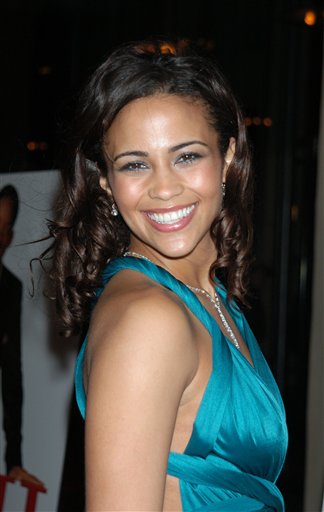
proves dangerous. Percival, meanwhile, is smitten with Angel (Paula
Patton, no relation to Antwan), a torch singer with a secret, who comes
to town on a temporary contract and finds herself caught up in the
ensuing uncertainty and conflict.
Writer-director Bryan Barber, a frequent music-video collaborator
and longtime friend of Outkast, knows the pair well enough to write to
their relative strengths, and not ask them to stretch too far beyond
their comfort zone. For Patton (the less screen experienced of the two)
this means a role shaped as much by those around him (including Bobb’e
J. Thompson as a younger iteration of the character) as Rooster’s own
actions; for Benjamin it means a nervous and introverted role that taps
into his soulful quietude. While full of plenty of crooked,
idiosyncratic detail, Idlewild, which got its start as an HBO
movie, doesn’t strive for an exacting historical accuracy so much as an
emotional truth, and in this regard it succeeds.
Where the movie really sings, though, is in its cathartic, mash-up
dance sequences, choreographed by Hinton Battle. Combining elements of
swing, jitterbug, break-dance and the Lindy Hop, these numbers shimmer
with unbridled joy and a pure, pleasing energy unmatched by anything
else on the big screen this year. Barber’s video-honed style, too,
feeds the story. While the beginning and end of the movie offer the
most stylized bits, he also deploys classic editing techniques, subtle
flashes of slow motion and fast forward throughout, and a soundtrack —
which includes a score from workhorse John Debney — that incorporates
various bleeps, scratches and modern high-hats folded into
period-inflected music.
While driven, especially early on, by an overt theatricality that
extends to many of its supporting performances (Faizon Love is a hoot
as blustering club owner “Sunshine” Ace), Idlewild locates a
balanced contrast in Percival, the heart of the film, and Benjamin
knocks this role out of the park with a perfectly measured performance.
If movies are indeed a siren call to the musical performer — who’s also
cameoed in Be Cool and given an equally grounded turn in Four Brothers — the unadulterated delight of Idlewild proves he has an equally felicitous future there. (Universal/HBO Films, R, 123 mins.)